Your cheeks and forehead may not ask for the same amount of product. When cheeks feel dry but the center of the face feels comfortable, it can be useful to notice that difference before replacing the whole routine with a heavier one.
Begin by checking what happens at the cheek area during cleansing and makeup removal. Are you making extra passes there? Does a towel rub the same spot? A new cream may be only part of the answer if the surrounding routine has become unnecessarily vigorous.
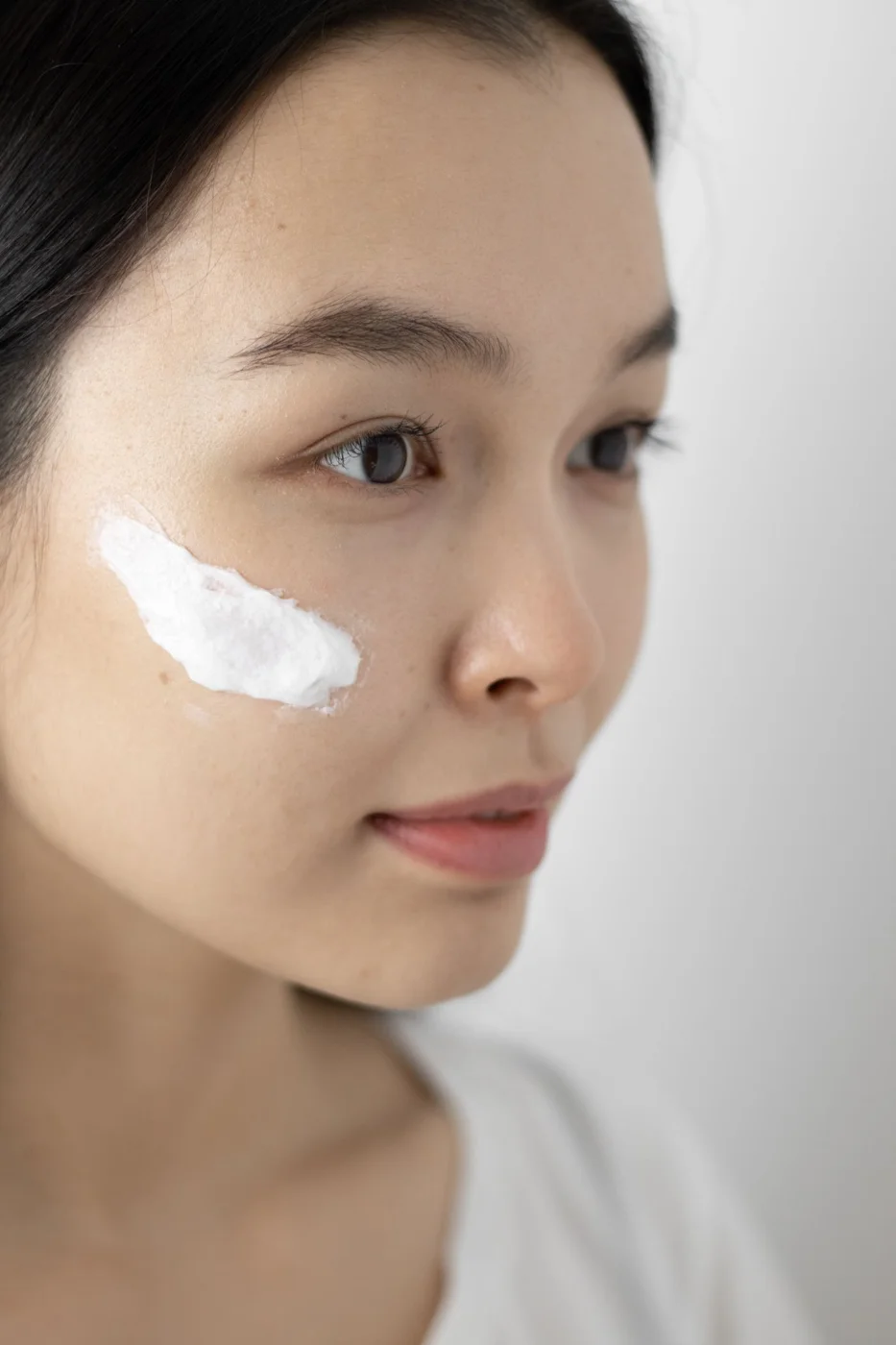
Keep any changes modest. Use a familiar moisturizer according to its directions and pay attention to the amount you distribute over the cheeks. You do not need a different bottle for every part of the face. Sometimes the useful change is applying the product more thoughtfully rather than quickly spreading the same thin layer everywhere.
Look at the ordinary sources of friction
Scarves, mask edges, phone use and the way you rest your face in your hands can all affect how a particular area feels during the day. This is an observation exercise, not a way to diagnose a rash. Notice patterns without assuming that the first thing you identify must be the cause.
For example, if makeup looks patchy on the cheeks late in the day, compare how the area looked before makeup. Adding more foundation may disguise the texture briefly without helping you understand it. Try keeping the skin routine steady and changing only the makeup application on another day.
Avoid making the cheek area a testing ground for several rich products at once. Oils, masks, balms and new actives can make it difficult to tell what feels comfortable. The simpler the change, the easier it is to decide whether it belongs in the routine.
Persistent dryness, cracking, pain or a new rash deserves advice from a qualified clinician rather than endless product trials. Stop using a product that clearly irritates the area. A general lifestyle article cannot identify the reason for ongoing skin symptoms.
Once you find an approach that feels comfortable, you can stop adjusting it. There is no reward for balancing the face with mathematical precision. The purpose is to get through ordinary mornings and evenings without repeatedly noticing uncomfortable cheeks.