A clean face towel is only convenient if you can reach it with wet hands. The corner of the sink may seem ideal until it catches every splash. Start by looking at the route between rinsing and drying, then find a place that does not require opening a cabinet or crossing the room.
A hook or short rail beside the sink can work well. Leave enough space for the towel to hang open instead of bunching into a thick fold. If the bathroom is small, a hook on the side of a cabinet may be more useful than a decorative basket on the counter.
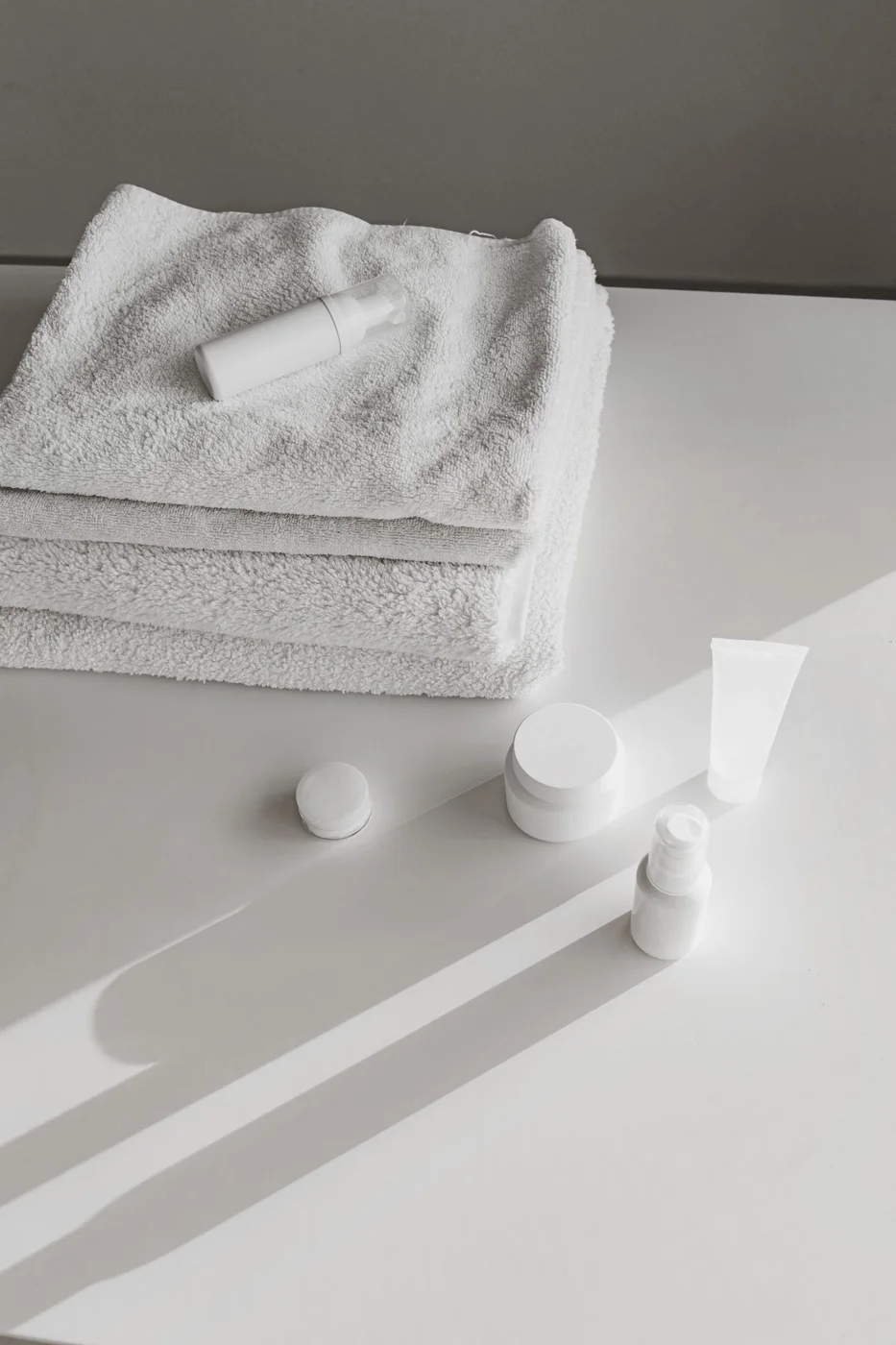
Keep the clean stack in a dry place. A drawer or shelf outside the immediate splash area is often easier to manage than a pile beside the faucet. If other people use the bathroom, a clear location helps distinguish face towels from the hand towel without needing a complicated labeling system.
Choose a manageable number. Too few creates pressure to reuse a towel you would rather replace; too many can hide the fact that laundry has not moved. The right amount depends on your household and washing schedule, not on a matching set sold in a particular quantity.
Used towels need their own route. Let wet fabric dry before leaving it in a closed laundry container for a long period. If your bathroom stays humid, consider a more open drying location rather than folding the towel neatly while it is still damp.
Avoid a storage idea that requires precise folding every day. A rolled display can look attractive but becomes less useful if you have to dismantle it whenever you take a towel. Keep the everyday arrangement simple enough to reset while you wipe the counter.
After a few days, check what actually happens. Does the towel fall off the hook? Does it touch a toilet brush or cleaning bottle? Is someone using the clean stack to mop up the sink? Adjust the location around those observations. The best towel storage often looks ordinary because it is doing an ordinary job reliably.