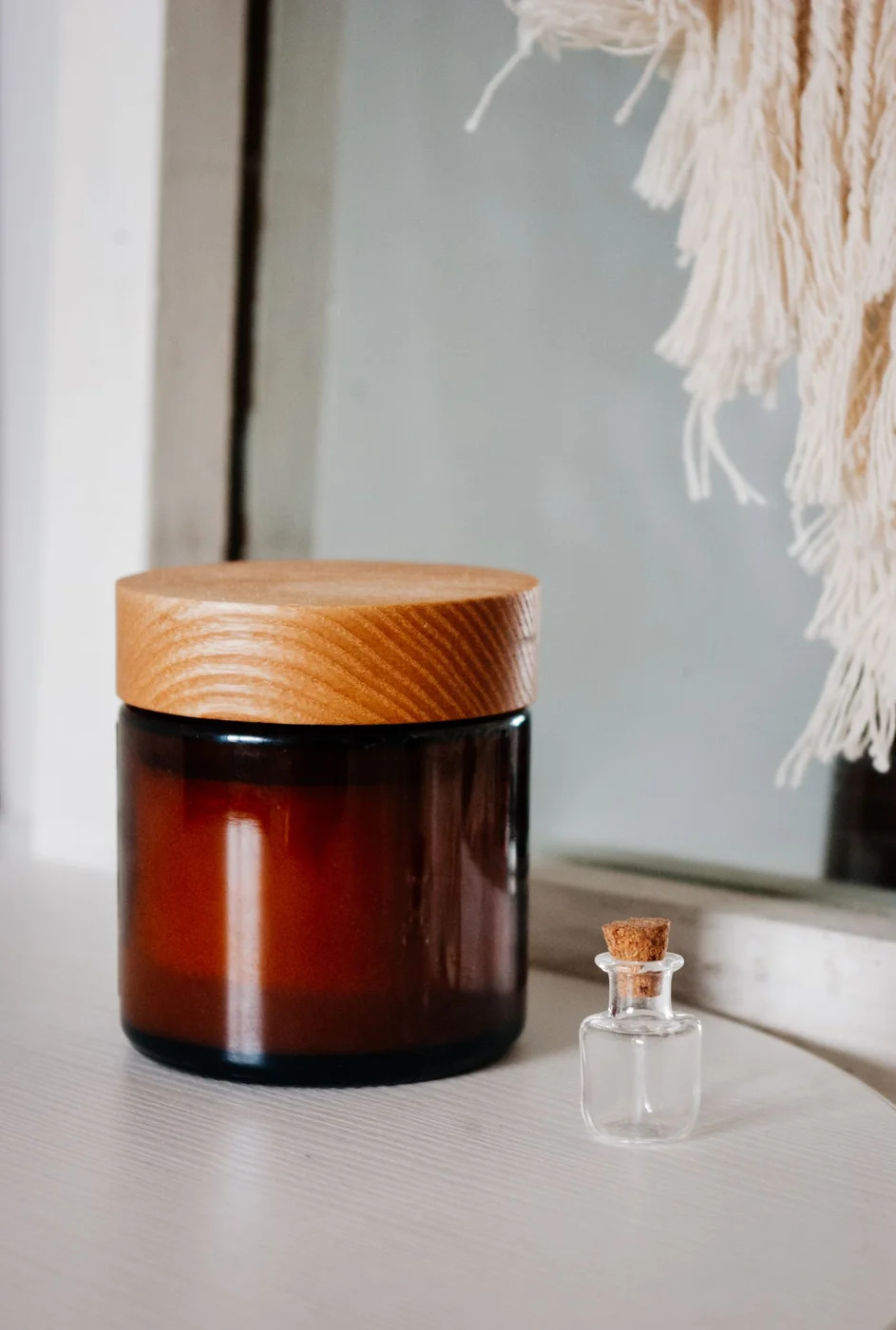
A bathroom sink can become crowded with surprisingly few objects. A soap dispenser, toothbrush cup and several skincare bottles may leave nowhere for wet hands to move. Before buying organizers, clear the surface and put back only what you use there every day.
Notice the working area around the faucet. Products should not force you to reach over glass bottles to turn the water on, and a towel should be reachable without moving the whole arrangement. If the counter is narrow, the most useful storage may be beside the sink rather than on it.
A small wall shelf or cabinet section can hold the routine at eye level. A tray can contain a few bottles, but choose one that is easy to lift for cleaning. An organizer with many compartments may simply encourage you to keep more products in the splash zone.
Arrange by use, not bottle height
Keep the cleanser close to the washing area. Put the products applied afterward together in a dry spot. Store backups and occasional items elsewhere so they do not compete with today's routine. A tall bottle can go at the back, but accessibility matters more than a perfect display.
If you share the sink, leave enough neutral space for the other person's routine. Two small designated areas may work better than one packed shelf that everyone rearranges. Avoid placing personal products where they can be confused with household cleaners or used by children.
Keep labels visible and original caps attached. Decanting everything into matching bottles can remove instructions while adding another cleaning task. A modest mixture of packaging is easier to live with than a coordinated display that no longer tells you what is inside.
At the end of the routine, close the products and wipe obvious drips. This should take a few seconds, not require dismantling the storage. If it does, simplify the arrangement further.
After a week, remove anything you repeatedly move out of the way. That object is giving you useful information about the space. A small sink does not demand a smaller interest in skincare; it simply benefits from a clear boundary between the products you use now and the collection you store elsewhere.