On some nights the bedside table looks like a second desk. There is a charging cable beneath a stack of receipts, a half-finished task on a tablet and three books that have become reminders of things to catch up on. None of those objects is a personal failure. They simply ask for attention at a time when you may want fewer demands.
Try clearing the surface without turning the bedroom into a decorating project. Leave the things you use in the dark or immediately before sleeping. Move everything else to a temporary basket outside the sleeping area. You can decide where those items belong tomorrow; the evening does not need to become a complete home-organizing session.
Keep what serves tonight
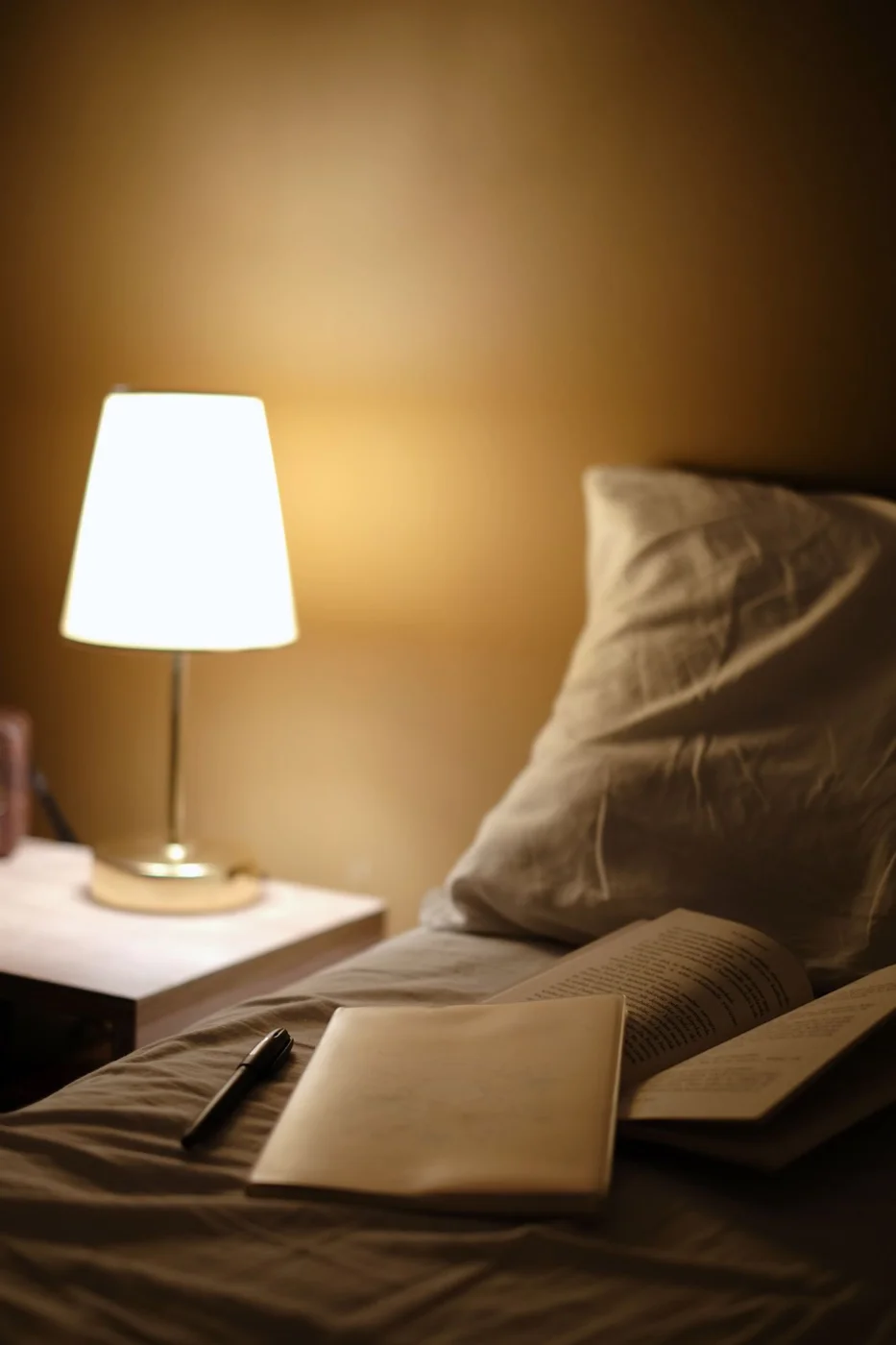
Your version of a useful bedside arrangement might include a lamp, glasses and a book. Someone else may need accessible medical equipment, hearing-device storage or a phone within reach for caregiving. Those needs come before a photograph of a perfectly empty table. Make room for them and arrange the cables so they do not cross a walking route.
Put the lamp switch where you can find it without shifting a glass or reaching across a pile. A light that is comfortable for reading need not illuminate the whole bedroom. If you share the room, check its direction from the other pillow too. Small changes in placement can matter more to your partner than a different lampshade.
Give unfinished tasks another address
A short note can hold a practical reminder: return a library book, move the laundry or send a document. Keep the note brief enough that it does not become a planning meeting. Then place it where you begin the next day, rather than leaving it open beside your pillow.
If your phone stays nearby, decide which function you need from it tonight. An alarm, an emergency call and an endless feed do not require the same settings. Use the device's controls to keep necessary access while reducing the alerts you do not want. There is no requirement to put the phone in another room if that would leave you worried about missing an important call.
The National Heart, Lung, and Blood Institute recommends a quiet period before bed and a bedroom that is dark, quiet and comfortably cool. Clearing a small surface is only one way to support that environment. It is not a treatment for insomnia, and an attractive nightstand cannot compensate for a schedule that leaves too little time for sleep.
After a few evenings, look at what has quietly returned to the table. A necessary object deserves a place. A work document may need a different stopping point. Adjust the arrangement to the pattern you see, rather than starting a nightly contest to keep the surface empty.