The drying routine often goes wrong at the preparation stage. Clips are missing, the cord is tangled and the brush is still full of hair. Setting out the tools first can reduce the temptation to turn the heat up simply because you are running late.
Read the dryer's instructions, including the cleaning requirements for its filter and any electrical-safety warnings. Use it away from water as directed, with dry hands and a clear, stable place to set it down. Do not balance a running dryer on the sink or cover its air intake with a towel.
Prepare manageable sections
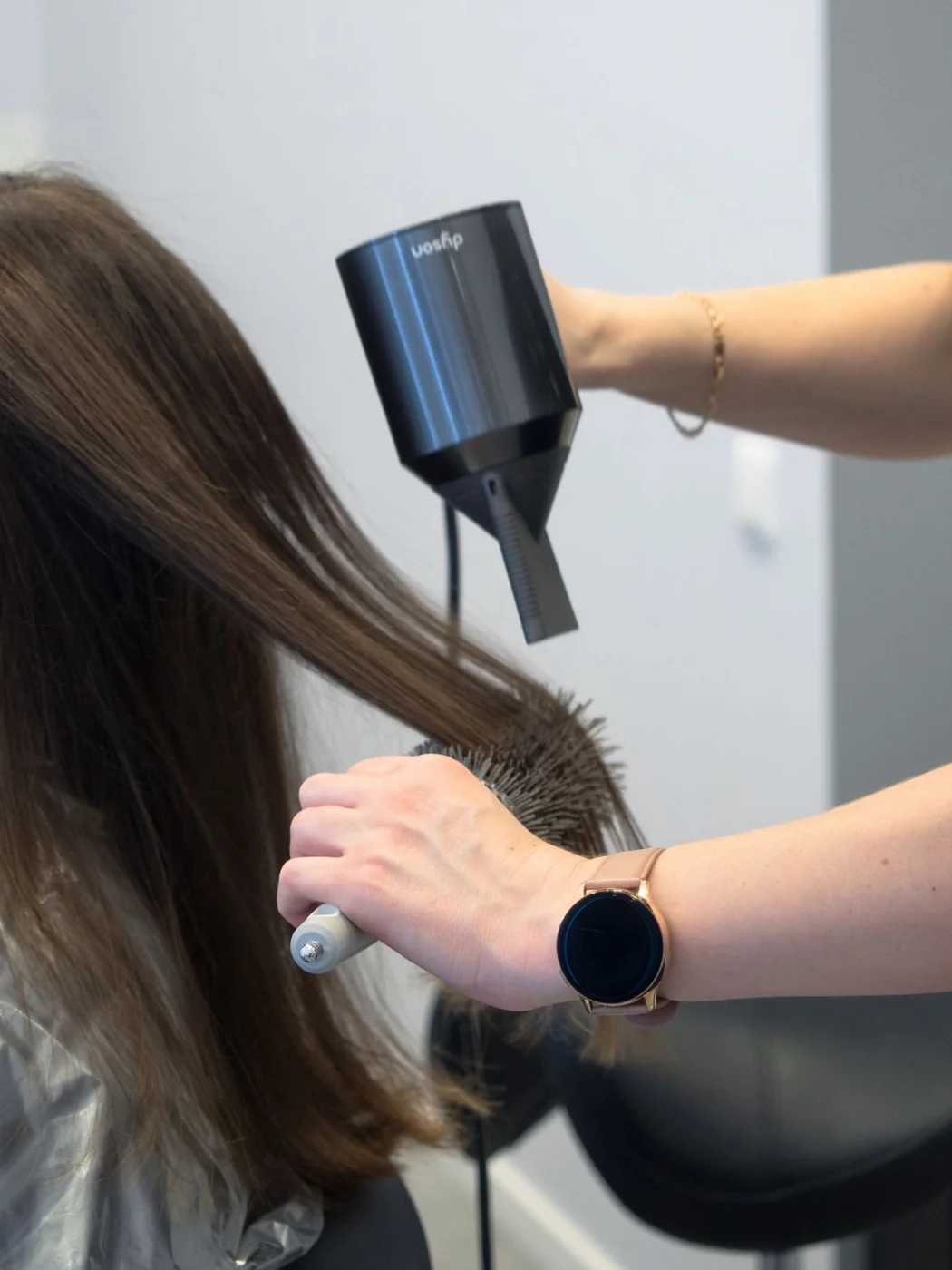
Choose a section size you can control with the brush or method you use. Very large sections can make you repeat the same pass without reaching the inner hair evenly. Very small sections may add unnecessary time. The right size is the one that lets you work without pulling or losing track.
The American Academy of Dermatology advises limiting heat exposure and using lower heat settings when styling. Start conservatively and follow the tool and product directions rather than treating maximum heat as the normal setting.
Keep the airflow moving in a controlled way and avoid holding intense heat against one area. If the process feels painfully hot, stop and adjust. A heat-protective product, used as directed, does not make unlimited heat harmless or replace sensible tool handling.
Choose the finish before starting
A quick dry for an ordinary day and a detailed blowout are different tasks. Decide which one you have time for. If you need only a comfortable, manageable result, you can leave out the extra polishing passes that belong to a more elaborate style.
For long or dense hair, plan a pause if your arms become tired. A tired grip can make a brush pull more or a dryer sit too close. Resting briefly is better than trying to finish the back of the head while losing control of the tools.
If the hair repeatedly needs high heat and force to reach the style you want, discuss the method with a stylist. The answer may involve a different cut, tool or expectation rather than another product layer.
Finish the equipment routine
A bathroom with one outlet may encourage you to place tools too close to the sink. Reconsider the setup rather than accepting that arrangement as inevitable. Use electrical equipment only in locations and conditions permitted by its instructions, and ask an appropriate professional about an unsuitable outlet or installation. An extension arrangement improvised around water is not a styling solution.
For travel, check the appliance's voltage and other electrical requirements before packing it. A plug adapter does not necessarily make a dryer compatible with a different electrical supply. If the accommodation provides a suitable appliance, using it may be easier than transporting a tool that cannot safely be used there.
Switch off, unplug and allow the appliance to cool according to its instructions before storing it. Keep the cord arranged without tight bends or damage, and clean the filter on the schedule the manufacturer recommends. A drawer packed with a hot tool and loose fabric is not a suitable endpoint.
The time saved by preparation may be modest, but it changes the whole experience. You can focus on the section in front of you instead of searching for a clip while holding a running dryer, and the final result does not depend on rushing through the last few minutes.