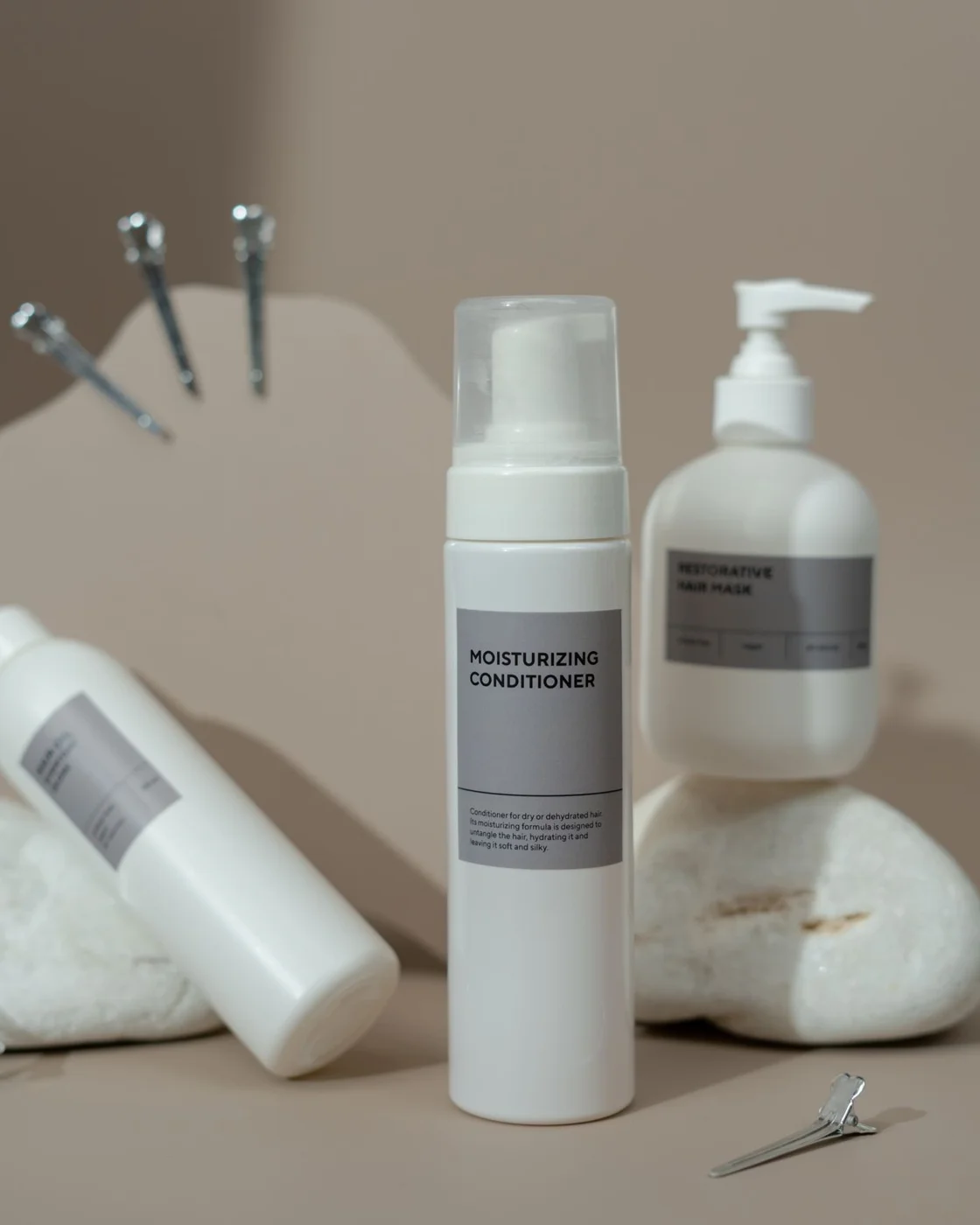
Conditioner placement becomes easier when you look at the hair in sections. The ends may feel different from the newer growth near the scalp, and a short cut may need a different approach from long curls. Begin with the directions on the bottle, then consider the areas you are trying to make easier to manage.
The American Academy of Dermatology notes that fine or straight hair may need conditioner mainly at the ends, while dry or curly hair may benefit from application through the lengths. That is a starting point, not a requirement to use the same amount on every head of hair.
Distribute before adding more
Put the product in your hands and work through manageable sections according to the label. If one area feels missed, separate it before reaching for another large dose. A conditioner can seem ineffective simply because it has collected in one easy-to-reach part while other sections received very little.
Pay attention to the back of the head, where long hair can overlap. Move it gently rather than twisting it into a tight bundle. If you use clips, choose ones that open and close comfortably with wet hands and do not catch when removed.
Leave the conditioner on only as directed. A longer wait is not automatically better, and a rinse-out formula should not become a leave-in product because you ran out of time. Keep the two categories separate.
Make rinsing part of the plan
Use the manufacturer's instructions for rinsing and the finish the product is designed to leave. Avoid chasing a completely bare-feeling result if that means repeated washing after conditioning. Equally, do not leave a heavy coating merely because a video described it as extra nourishment.
Notice how the hair feels once dry, not only in the shower. Does it remain easy to manage? Does the amount suit your preferred style? If the roots feel coated, examine placement and quantity before deciding that all conditioner is wrong for you.
Change one thing at a time on a later wash day. You might use a little less in one area or distribute more carefully through another, while keeping the product itself familiar. This makes it easier to understand the effect of the adjustment.
Conditioner does not need a complicated map, but a little attention to where it goes can make wash day less frustrating. The useful measure is a manageable result with a method you can repeat comfortably.