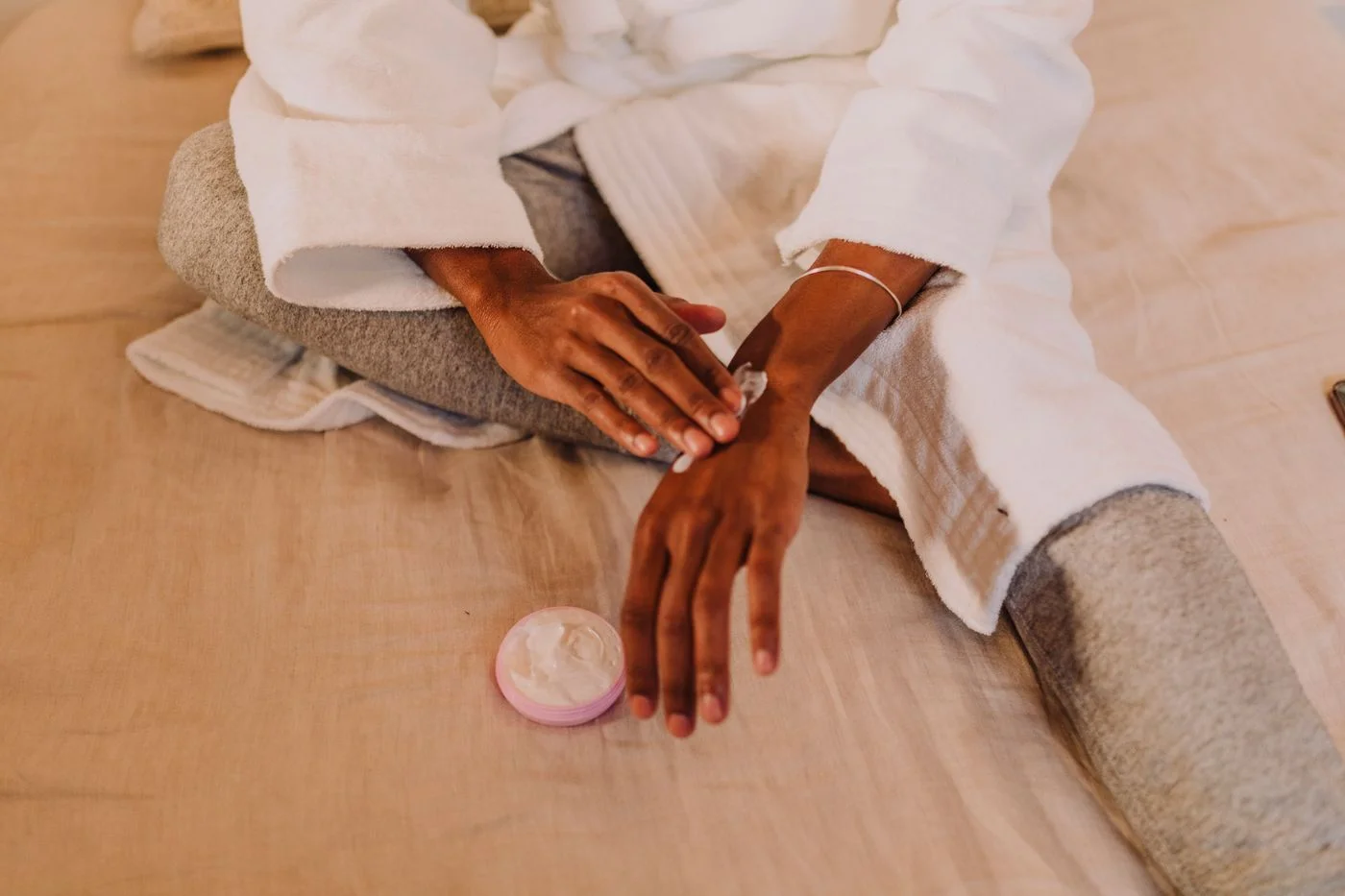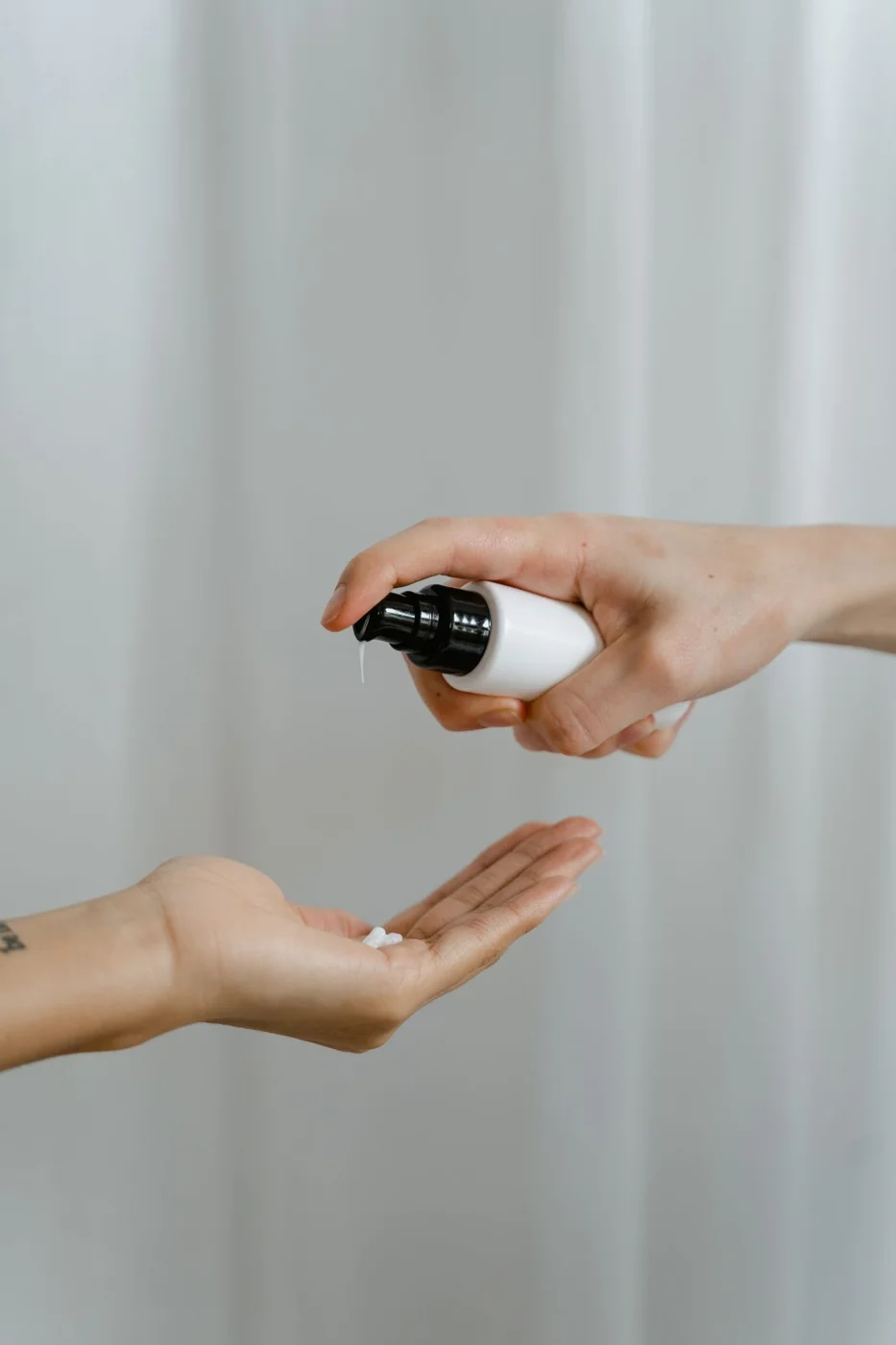
The most attractive place for a lotion bottle may be the least useful one. A deep shelf can make the bottle hard to retrieve; a pump can be stiff; a cap can require two hands when only one is available. Accessibility begins with the entire action, not simply whether the product is visible.
Walk through the routine in the position you normally use. If you get ready seated, assess the shelf from that seat. If you usually use one hand, check whether the bottle stays still while you open it. Notice the moment when you have to lean, twist, stand unexpectedly or search behind something else.
Move frequently used items into an easy reach and give them consistent positions. Heavy backups can live elsewhere, provided their storage is also safe. The daily surface does not need to display every product you own. Space around a bottle can matter as much as the height of the shelf because it gives your hand room to grasp it.
Packaging is part of the equipment
A pump may be useful for one person and difficult for another. A wide cap may be easier than a tiny one, while a slippery jar may be awkward regardless of its size. Evaluate a package before buying a large quantity. If an original container is difficult to use, ask the manufacturer about suitable alternatives rather than automatically transferring a product that needs specific packaging.
Readable labels help prevent mistakes. Add a clear identifier when useful, without covering instructions, warnings or expiration information. Distinct positions and larger text may be more dependable than remembering that two similar bottles have slightly different cap colors. Keep cleaning products separate so a reachable shelf does not create a different problem.
For bathing itself, equipment must suit the environment. An ordinary chair is not necessarily safe in a shower, and a towel rack is not a grab bar. AHRQ's home-safety guidance recommends properly secured support and suitable bathing equipment where needed. An occupational therapist can help assess your movements, space and equipment rather than leaving you to guess from a product photograph.
Ask before reorganizing someone else's supplies. A new arrangement can make a familiar routine harder if items move without explanation. Work with the person using the space, and let their preferences determine which changes help. Independence includes choosing how a routine is arranged, not merely being able to complete it quickly.
The result may be visually simple: fewer items, a reachable towel, a container that opens comfortably and a clear path. Those changes are worthwhile even when they are not noticeable to anyone who does not use the room.