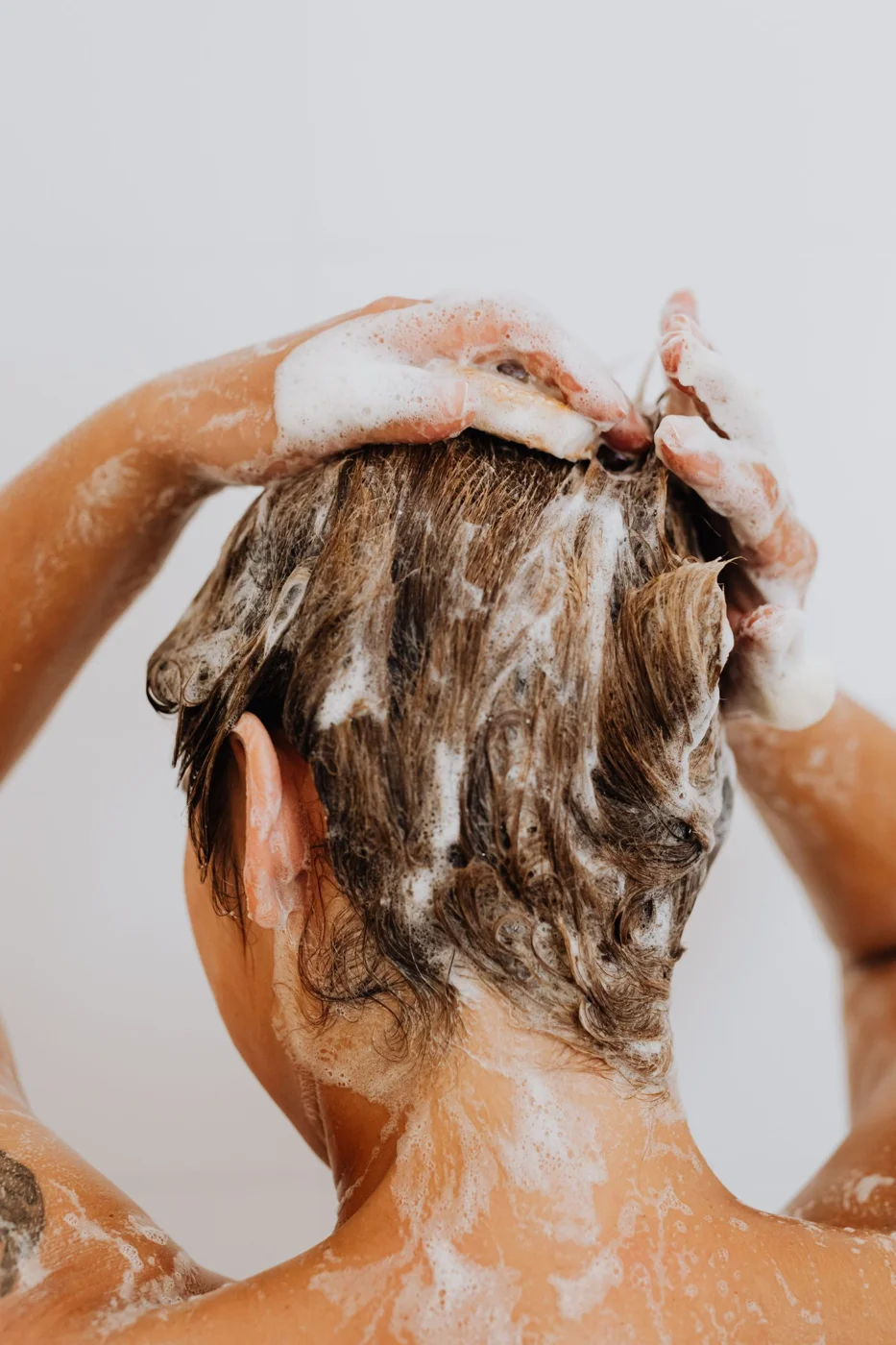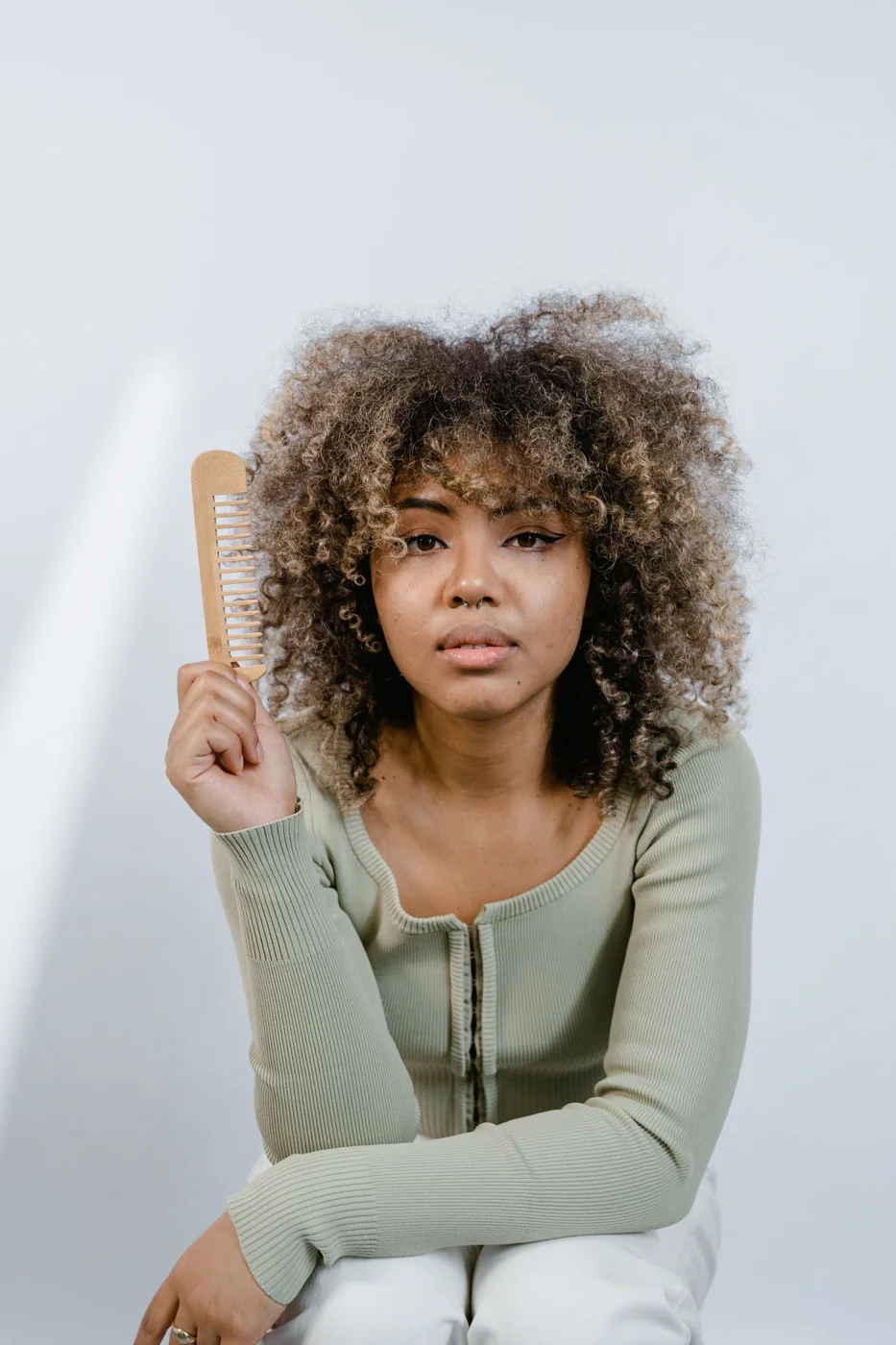
A curly-hair detangle becomes harder when it is squeezed into the last few minutes before you need to leave. Set aside the time and tools first. Conditioner, a suitable comb if you use one, clips and a towel should be within reach before your hands are wet.
The American Academy of Dermatology recommends gentle detangling and notes that thick, curly hair is often best combed while conditioner is still in during the shower. Work within your product directions and the method that is comfortable for your hair rather than forcing a dry-brushing routine copied from a different texture.
Make the sections useful
A section is useful when you can hold it comfortably and see what you are doing. It does not need to be perfectly measured. Divide dense or long hair enough that you are not dragging a comb through several hidden layers at once.
Support the section and begin with the tangles nearer the ends before moving upward. If the tool stops, pause and separate the area gently rather than pulling through with greater force. A snag is information about where attention is needed, not a test of the comb's strength.
Keep finished sections distinct from those you have not reached. Loose clips or another comfortable arrangement can help, provided they do not pull at the scalp. The point is to avoid doing the same work repeatedly as sections fall back together.
Notice the work at the back
The nape and back of the head may need a different hand position. Use a mirror if it helps, or divide the area more carefully. If holding your arms up becomes tiring, take a pause rather than rushing the remaining sections.
A shower setup with nowhere to put tools can make the task more difficult than it needs to be. A stable shelf within reach is useful; a comb balanced on a bottle is not. Keep the floor clear of dropped product and loose tools so you are not bending awkwardly while wet.
Finish without undoing the care
Rinse and proceed according to the products' directions. Handle the hair gently with the towel and choose a drying or styling method that fits the time remaining. A patient detangle followed by a rushed, tight twist can make the whole sequence less comfortable.
For a particularly busy week, consider separating the detailed styling result from the patient detangle. You might choose a simpler final arrangement while preserving enough time to work through the hair comfortably. This is often more realistic than trying to compress every stage into a shorter session.
If another person helps, explain where the section catches and what pressure feels comfortable. The helper should stop when you say it pulls, even if the knot appears small. Clear communication is more useful than expecting someone else to infer discomfort from the resistance of the comb. Assistance should make the process easier, not faster at any cost.
If detangling suddenly becomes much harder or is accompanied by scalp pain, unusual loss or another change, seek appropriate advice. Ordinary tangles and persistent symptoms should not be treated as the same problem.
You do not need a perfect curl pattern at the end of every wash. A manageable process, comfortable sections and less pulling are useful achievements even on a day when the final style is deliberately simple.