A styling tool may offer a wide temperature range without explaining which setting belongs in your ordinary routine. The highest number is not a default. Read the manufacturer's guidance for the appliance and any recommendations relevant to your hair, then begin with a conservative approach.
The American Academy of Dermatology advises limiting heat styling and avoiding unnecessary heat exposure. A product marketed as heat protection does not turn repeated high-temperature passes into a risk-free method. It is one part of a routine that still needs sensible handling.
Prepare before the tool heats
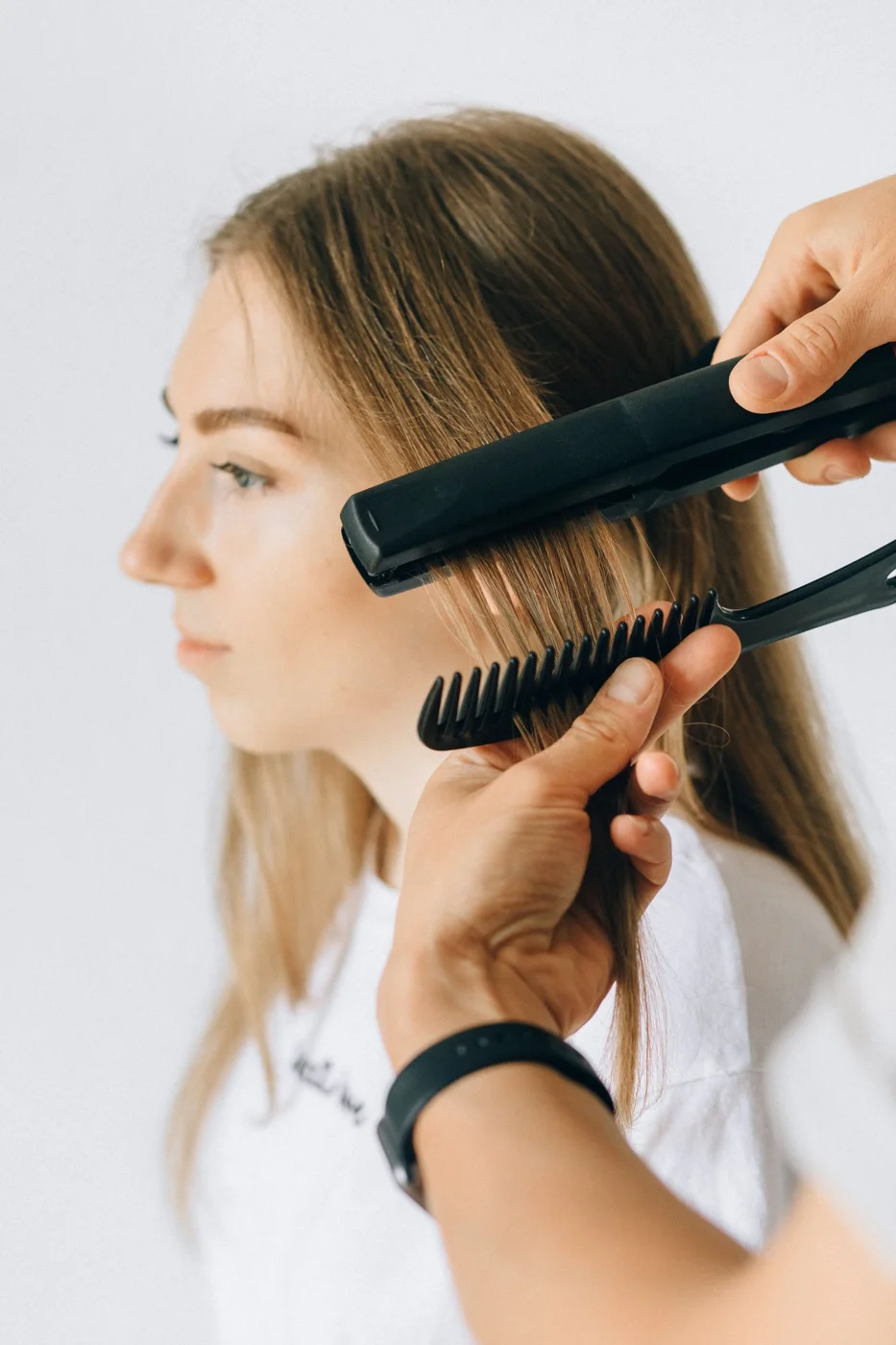
Have the comb, clips and a suitable heat-resistant resting surface ready. Check whether the tool is intended only for dry hair, and follow that instruction. Do not assume a sizzling sound is normal or continue working over moisture because you are in a hurry.
Separate the hair into sections you can manage. A large, tangled section can lead to repeated passes over the outside while the inner hair remains difficult to style. A more controlled section is often a better adjustment than simply increasing the temperature.
Keep the tool moving as its instructions describe, and stop if the process feels painful or the appliance behaves unexpectedly. Avoid touching heated plates or barrels to the scalp, ears or neck. A mirror should help you see the area rather than encourage you to reach blindly behind your head.
Decide which passes are necessary
After a section is styled, ask whether another pass changes anything useful. The urge to make every strand identical can extend the routine well beyond what the day requires. A slightly softer finish may be a reasonable choice when the alternative is repeatedly heating the same area.
If the desired style consistently requires maximum settings, force or multiple attempts, consult a stylist about the method. The tool, haircut or target result may need reconsideration. Buying a stronger appliance is not the only option.
Unplug the tool after use and let it cool safely before storage. Follow instructions for cleaning product residue, and inspect the cord and surfaces for damage. Temperature control includes the period after styling, when a hot tool left near fabric can create a household hazard.
A deliberate setting and a clear endpoint make heat styling easier to keep within the role you chose for it. The tool should help create a style, not dictate how much heat the hair has to tolerate every day.