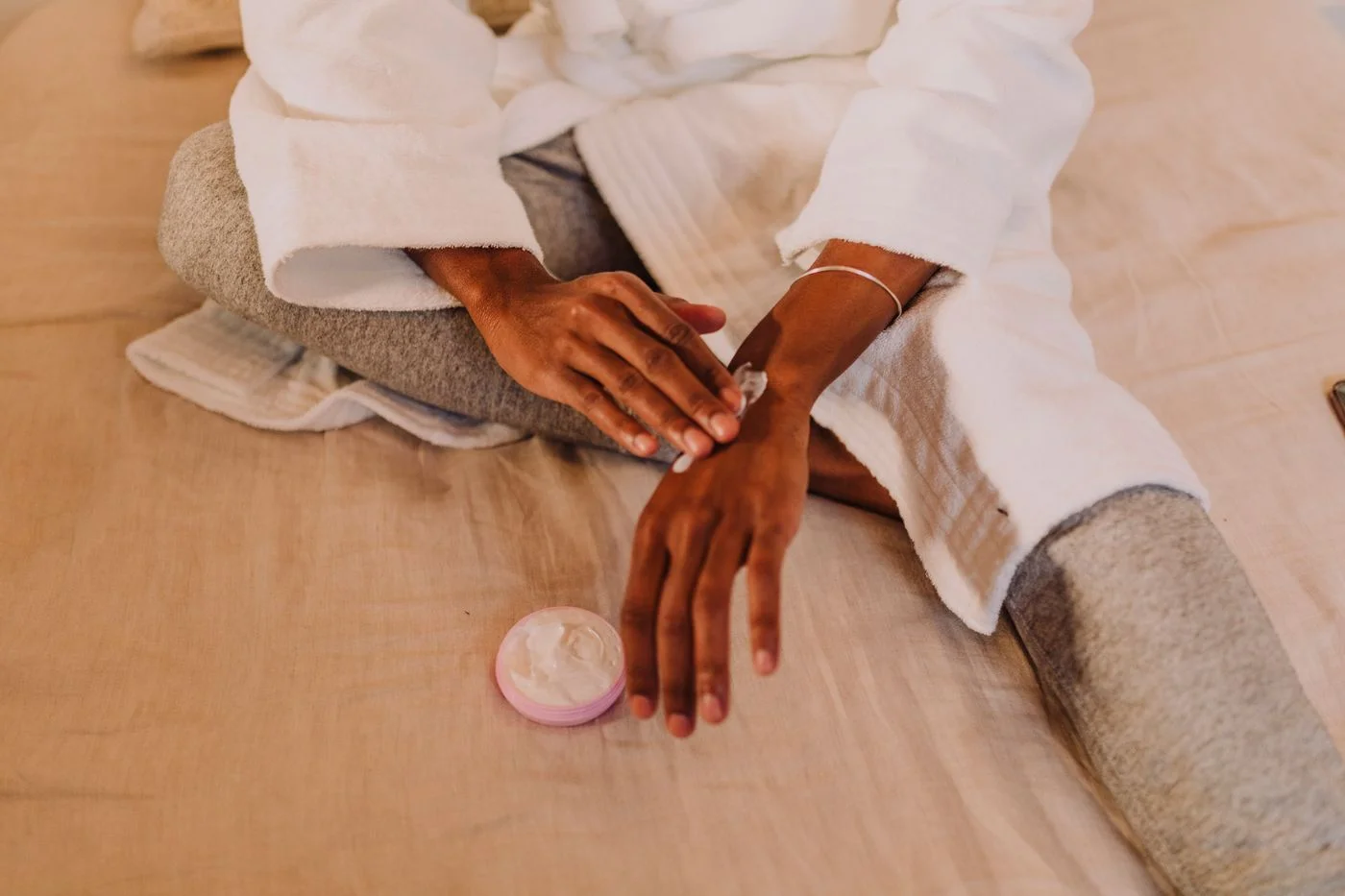
A heel product is easy to buy and easy to leave unopened because the moment to use it never seems convenient. Put it with the supplies for the part of the day when you can sit comfortably and follow its directions, rather than expecting to remember it while rushing out in shoes.
Read the label carefully. Products sold for heels can range from ordinary moisturizers to formulas with exfoliating ingredients and specific warnings. A general instruction to apply foot cream does not make every product suitable for broken skin or every medical circumstance.
The American Academy of Dermatology recommends seeking advice when dry, cracked heels are severe or do not improve. Do not treat deep, painful or bleeding cracks as a reason to keep experimenting with stronger cosmetic products.
Arrange a safe application
Sit on a stable seat where you can reach comfortably. Keep the floor dry and have suitable footwear ready for afterward. A slippery heel on a hard floor can turn a simple care step into a fall hazard.
Apply the product only where directed. If you have diabetes, reduced sensation or circulation concerns, follow your healthcare professional's foot-care advice. The CDC cautions people with diabetes against self-removal of corns or calluses; aggressive filing and cutting should not be added to a moisturizing routine casually.
Choose a time that gives the product room to fit the evening. If a formula transfers onto bedding or clothing, read its instructions and consider a more suitable arrangement rather than using much more and hoping it stays in place.
Look beyond the jar
Footwear matters to comfort. A worn edge, poor fit or an open back may be relevant to what you notice at the heels. Consider the shoes you wear most often and ask a qualified professional when pain or recurring problems make the choice unclear.
Keep the product's opening and expiration guidance available, and do not store a partly used tube indefinitely as an emergency solution. A familiar product in good condition is easier to use consistently than several old options with uncertain histories.
Heel care does not need an aggressive before-and-after project. A suitable moisturizer, safe application and attention to symptoms that need advice form a more useful routine than repeatedly scraping the area to chase a perfectly smooth photograph.