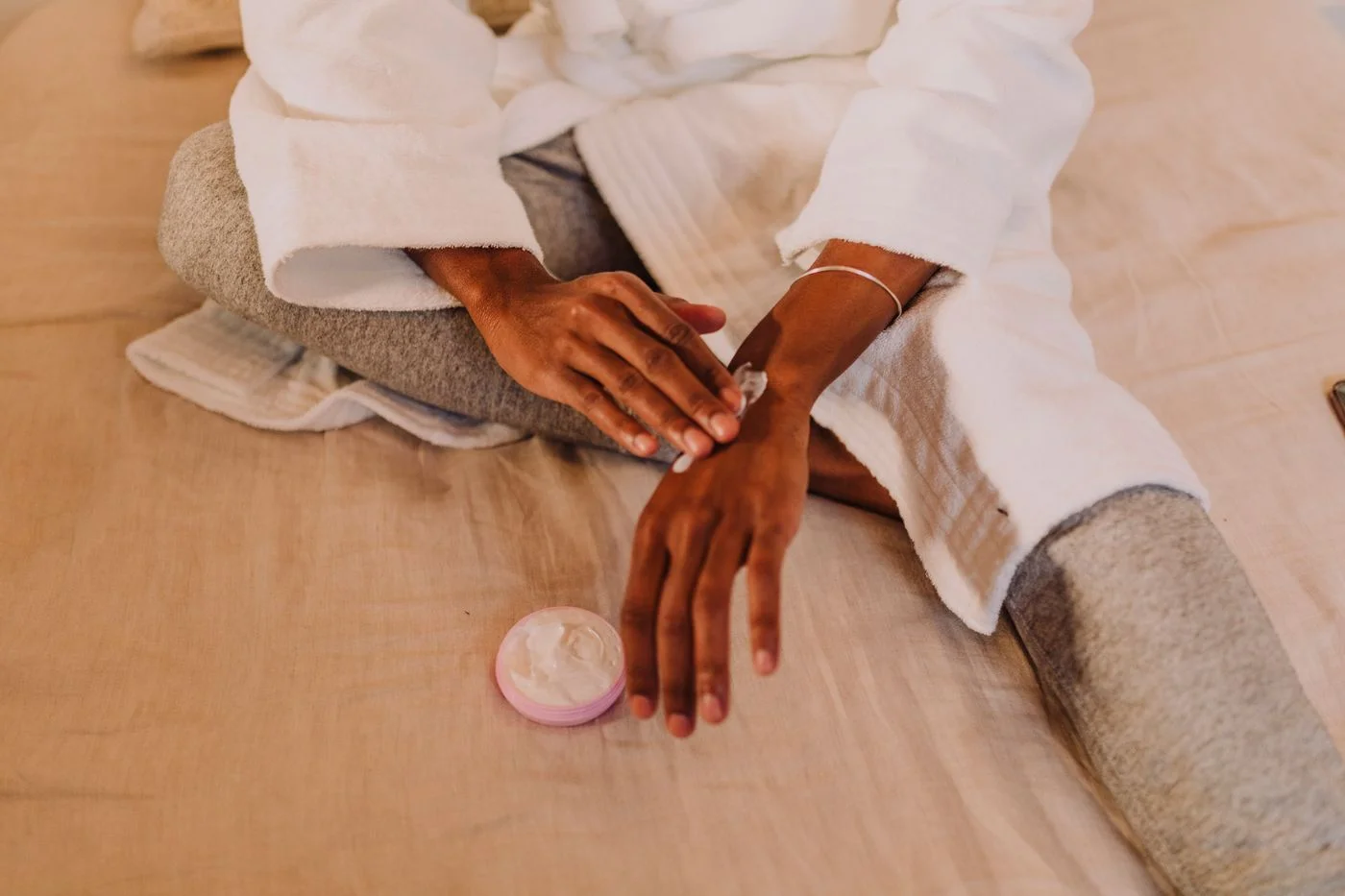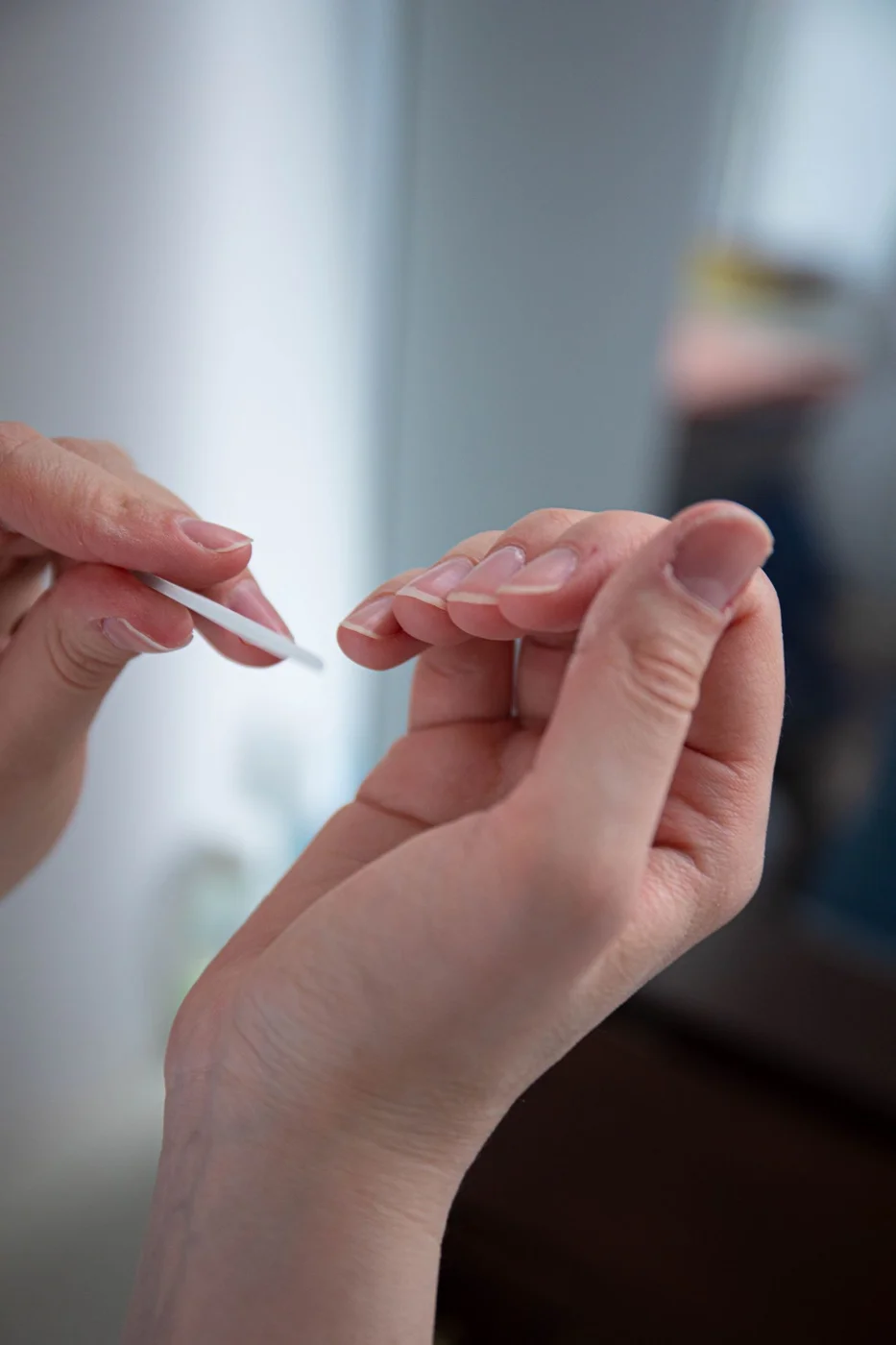
An at-home nail kit does not need every tool displayed in a salon photograph. Start with the items you can use safely and understand: suitable clippers or scissors, a nail file and the products you already use comfortably. Keep sharp tools secure and out of children's reach.
Inspect the cutting edges and file surface. A damaged tool can make the task awkward, and forcing a dull clipper is not a good substitute for a suitable one. Clean and dry tools according to their instructions before storing them.
Work where you can see
Choose good ordinary light and a stable surface. Avoid trimming while walking around, riding in a vehicle or balancing tools over a crowded sink. If you cannot see or reach the nails comfortably, ask for appropriate assistance rather than working by feel with a sharp tool.
The American Academy of Dermatology recommends keeping nails clean, avoiding cuticle removal and not digging out an ingrown toenail. Pain, swelling or unusual changes need professional attention rather than a more aggressive home manicure.
Keep fingernail shaping modest and suitable to your activities. A small snag can be addressed with a file rather than repeatedly biting or tearing it. Do not use nails as tools for opening packaging when a safer household tool is available.
Separate appearance from a problem
Polish can be enjoyable, but it should not hide a nail change you are trying to ignore. If a nail is painful, discolored in an unexplained way or lifting, seek advice before covering it with another cosmetic layer. People with diabetes or poor circulation should be particularly cautious about nail problems and obtain professional guidance.
If you apply polish, follow the product's directions and allow adequate drying time in a suitable, ventilated setting. Keep remover and other products away from heat or flames according to their labels.
It helps to divide the kit into routine grooming and decorative items. Clippers and a file should be easy to find without opening every polish bottle. Polish, remover and accessories can stay together in suitable storage, with caps secure and labels visible. This arrangement makes a quick snag repair possible without turning it into an unplanned manicure.
If somebody else helps with your nails, agree on the task before starting. A request to smooth a rough edge is not permission to remove cuticles or perform a more intensive service. Clear limits are especially useful when the helper has a different idea of what a complete manicure should include.
When finished, collect clippings, clean the work surface and return tools to a dry storage place. Do not leave an open kit in the bathroom where every item gets repeatedly splashed.
The purpose of home nail care is a manageable, comfortable result. You can leave out decorative steps and still have a useful routine. A few tools used carefully, with clear boundaries around what needs professional help, are enough for many ordinary grooming tasks.