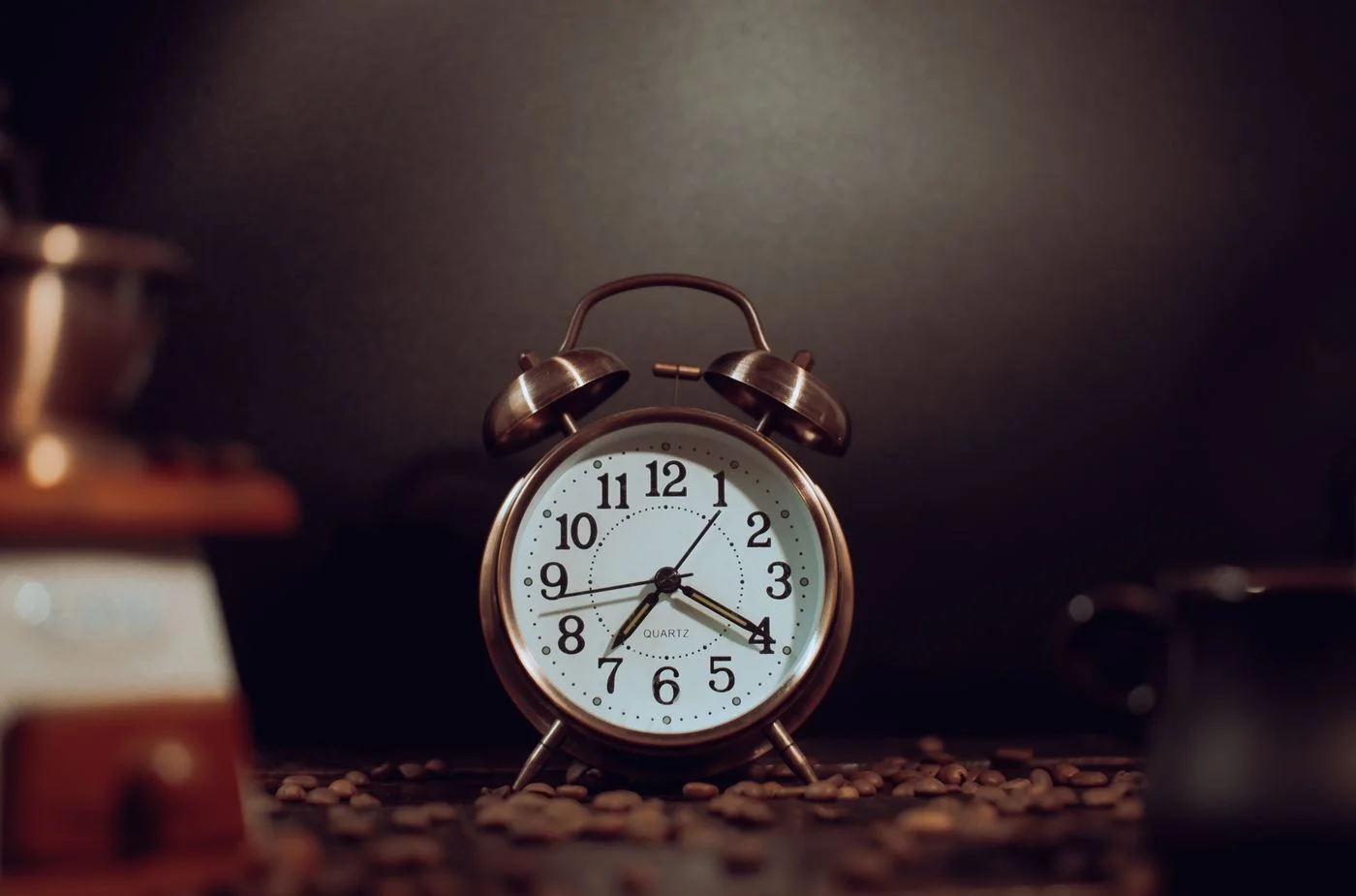
You wake briefly, see the clock and start doing arithmetic. There are four hours left before the alarm, then perhaps three and a half, and now the time itself has become something to monitor. A bright display can make that calculation almost automatic.
If you recognize the pattern, consider changing the clock's visibility before trying to change every part of your bedtime routine. Turn the display away from the pillow, reduce its brightness or move it to a position you can check deliberately rather than continuously.
Keep the necessary function
The alarm still needs to work. Test it while awake after changing the display or position. Make sure the controls are reachable and the cable does not cross a walking route. If you use a phone, confirm that the alarm settings are separate from whatever notification changes you make.
There may be reasons to know the time overnight, including caregiving or medication instructions. Keep that access. The aim is not to impose a rule against looking; it is to avoid making a clock the first thing in view whenever your eyes open.
A watch with a bright, movement-triggered screen can create the same problem. Check whether a night setting is available. Do not disable a function you rely on for safety or health monitoring without appropriate guidance.
Leave the calculations unfinished
You do not have to estimate tomorrow's performance from the number on a display. If a practical concern comes up, such as whether the alarm is set, deal with that once before bed. Rechecking repeatedly may create more activity around a question already answered.
Keep the morning decision separate. When you get up, assess how you feel and adjust the day sensibly if needed. Avoid driving or other risky activities when sleepy. A clock cannot tell you whether you are safe to do those things.
If waking and clock checking are frequent or distressing, a healthcare professional can help you look at the broader sleep pattern. Moving a clock is a small environmental experiment, not a treatment for insomnia. It may simply remove one invitation to turn a passing wake-up into a detailed accounting exercise.
Choose the least complicated arrangement that preserves the functions you need. A familiar alarm facing the wall can be more useful than a new device with another set of overnight statistics.