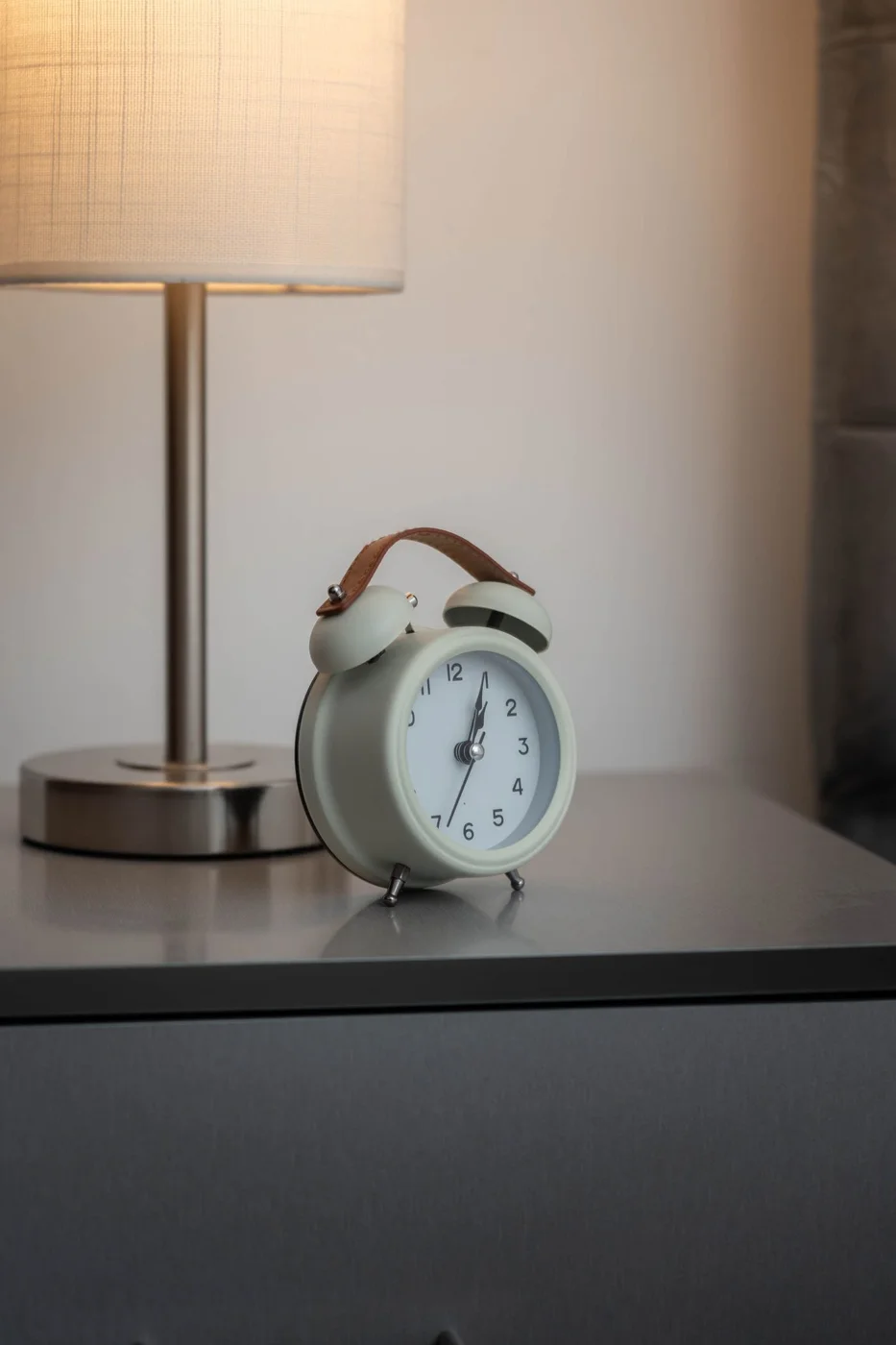
An alarm has a short job: get your attention when you need to wake. Many models add bright displays, weather reports, notifications and several sounds that continue after the first alert. Before replacing yours, decide which of those functions you actually want beside the bed.
Start with the wake-up requirement. Someone who needs an early work alarm may value reliable backup power. Someone sharing a room may need an alert that can be stopped quickly without lighting the whole space. Hearing accessibility needs can make a vibrating or specialized alarm more suitable than an ordinary speaker.
Try the controls before bedtime
A button that looks obvious on a product page can be difficult to identify by touch. Check whether you can stop the alarm without accidentally changing tomorrow's time. If the clock has separate weekday settings, confirm what happens on holidays and days off. A trial while awake is less frustrating than discovering the controls at six in the morning.
The display matters too. Look for adjustable brightness or a display that can be switched off if you prefer. Place the clock where it can be reached safely, with no need to lean across a glass or pull a charging cable. Keep the cord clear of the route out of bed.
If you use a phone, inspect the alarm settings rather than assuming that a silent mode affects every sound in the same way. Device behavior varies. Test the exact combination of alarm, volume and focus settings you intend to use. Keep necessary emergency access available.
Avoid solving a schedule problem with more alarms
A row of alerts every few minutes may make waking feel more complicated without giving you a clearer plan. Consider what happens after the first alarm: turning on a lamp, opening curtains or putting your feet on the floor. Set up that next action so it is easy to begin.
For an important appointment, a sensible backup can be useful. It does not need to become the everyday arrangement. If you regularly sleep through alarms despite allowing enough time for rest, or feel very sleepy during the day, discuss the pattern with a healthcare professional.
Choose the simplest alarm that meets your actual needs, then leave its settings alone unless your schedule changes. A familiar control is often more useful in the dark than another feature.