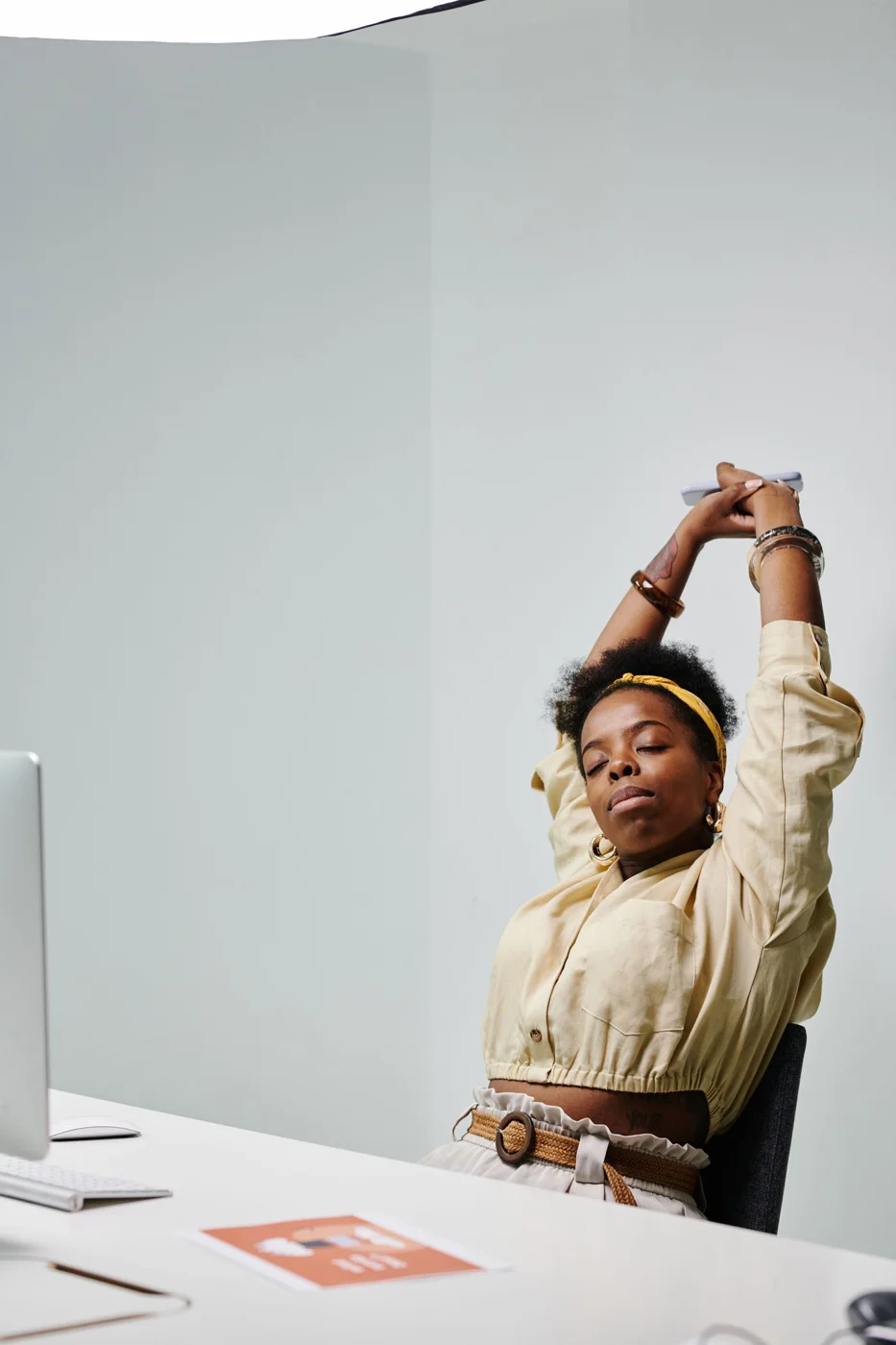
Switching from a laptop to a phone changes the content but often keeps your attention on another nearby screen. If the purpose of a break is to look away from close work, it helps to choose a destination for your gaze before the next pause arrives.
Look around the room. A window view, a distant doorway or an object across a larger space may offer somewhere farther away to focus. You do not need an attractive landscape. The useful feature is the change in distance, and you should never look directly at the sun.
The National Eye Institute suggests the 20-20-20 approach: roughly every twenty minutes, look about twenty feet away for twenty seconds. It is a simple reminder to interrupt extended close viewing, not a substitute for appropriate eye care.
Fit the reminder to your work
A gentle timer may help, but a natural task transition can be easier to follow. Finishing a page, ending a call or waiting for a file can become a cue to look across the room. Keep safety-critical work and responsibilities in mind; the reminder should not demand attention at an inappropriate moment.
If the room is small, look through an open doorway where possible or use the most distant comfortable view available. You do not need to measure the room repeatedly. Avoid turning an uncomplicated pause into a calculation that keeps you focused on a screen-based timer.
Use the moment to notice whether you have been squinting or leaning forward. Larger text, reduced glare or a more suitable screen position may help with those practical issues. Do not simply endure a display that is difficult to read because you have scheduled breaks around it.
Keep the rest of the pause simple
You can blink normally, change position or stand if that is comfortable and safe. There is no need for forceful eye exercises or pressure around the eyes. A screen break should not introduce a new technique that causes discomfort.
When you return, resume the task you left rather than opening notifications by default. If every break becomes a social-media check, the original purpose is easily lost. Keep the phone face down or outside the immediate work area if that helps.
Persistent eye discomfort, changes in vision or other ongoing symptoms deserve professional advice. A habit of looking away can support a more comfortable workday, but it cannot determine why a symptom is happening.
Try the arrangement for several days and remove whatever makes it fussy. A reliable distant view and a cue you notice are more useful than an elaborate dashboard tracking how successfully you rested your eyes.