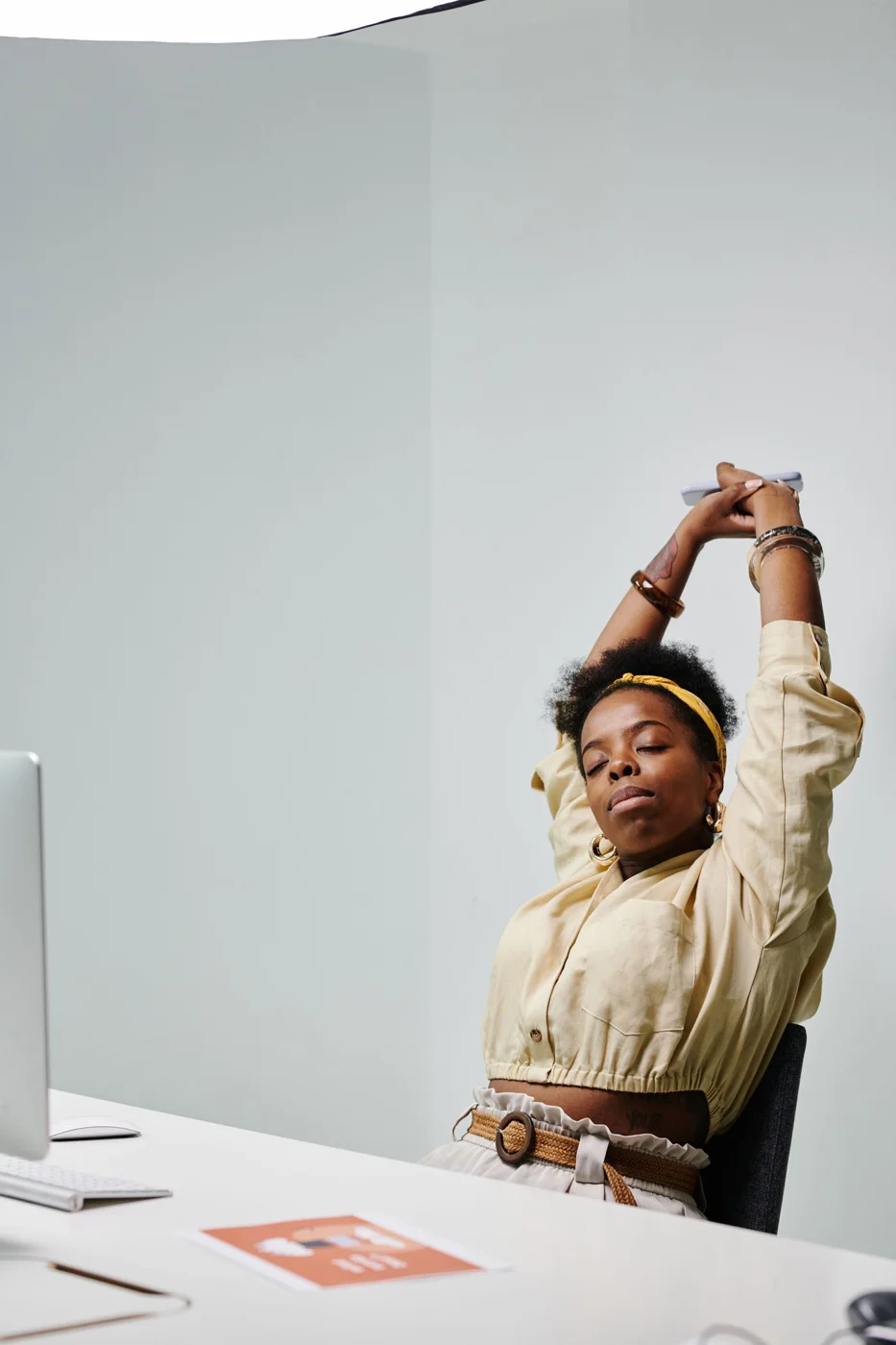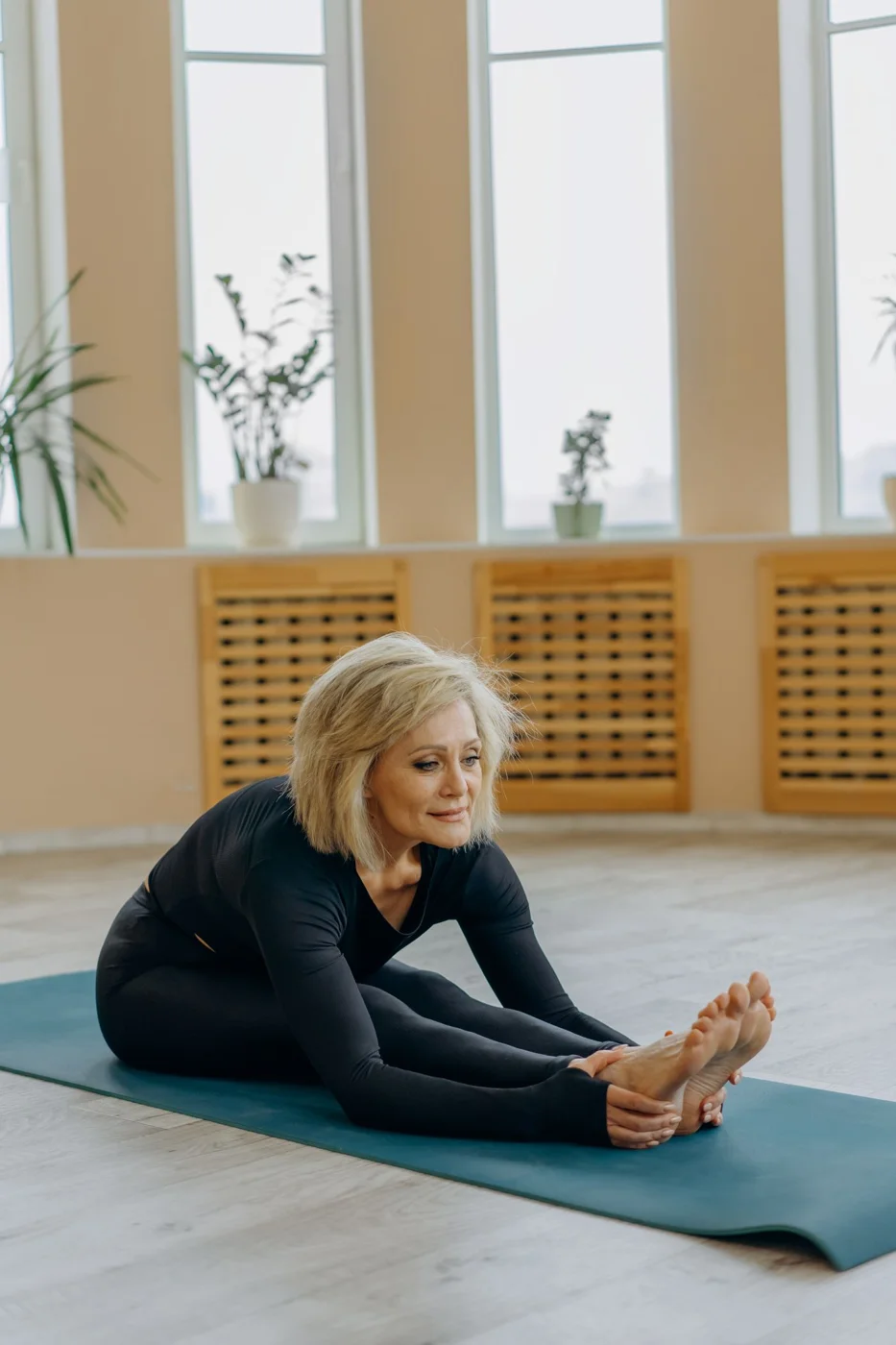
Movement does not have to begin by standing up. For some people, seated activity is more accessible, more comfortable or the right choice under professional guidance. The setup still matters: a cramped desk and a chair that rolls away can make a simple movement unnecessarily awkward.
Choose a stable seat suitable for the activity. If you use a wheelchair or another mobility device, follow its instructions and your individual guidance about positioning and brakes. Do not improvise with supports that can slip or change the device's intended function.
Clear space around the arms, feet and sides of the chair. A nearby table corner or bag can become an obstacle once you move beyond the position used for typing. Keep the route out of the area clear as well.
Start with familiar movement
Choose an activity you understand and can do comfortably. A qualified instructor or clinician can help adapt movement to individual needs. General online videos vary widely, and a sequence labeled seated is not automatically suitable for everyone.
Keep your breathing comfortable and avoid forcing a range of motion to match a demonstration. Stop if you develop pain, dizziness, numbness or other concerning symptoms. If you have a condition affecting activity or are returning after illness or injury, follow personalized advice.
If a screen provides instructions, position it where you can see without repeatedly twisting or leaning. Preview unfamiliar movements before trying them. You should not have to keep a difficult position while waiting for the video to explain the next step.
Make the space easy to use again
Store any equipment within a safe, comfortable reach and use it only as intended. Check bands or other items for damage according to the manufacturer's directions. Keep small equipment away from children and pets when not in use.
A short session can be enough for the time available. Avoid comparing its appearance with a standing workout or assuming it is valuable only if it feels strenuous. The appropriate activity is the one that fits your circumstances and goals safely.
Afterward, return the chair and equipment to their normal arrangement without leaving obstacles. If setup is cumbersome, simplify it. A dependable seated movement space should support participation rather than require a series of difficult transfers or furniture changes before anything can begin.