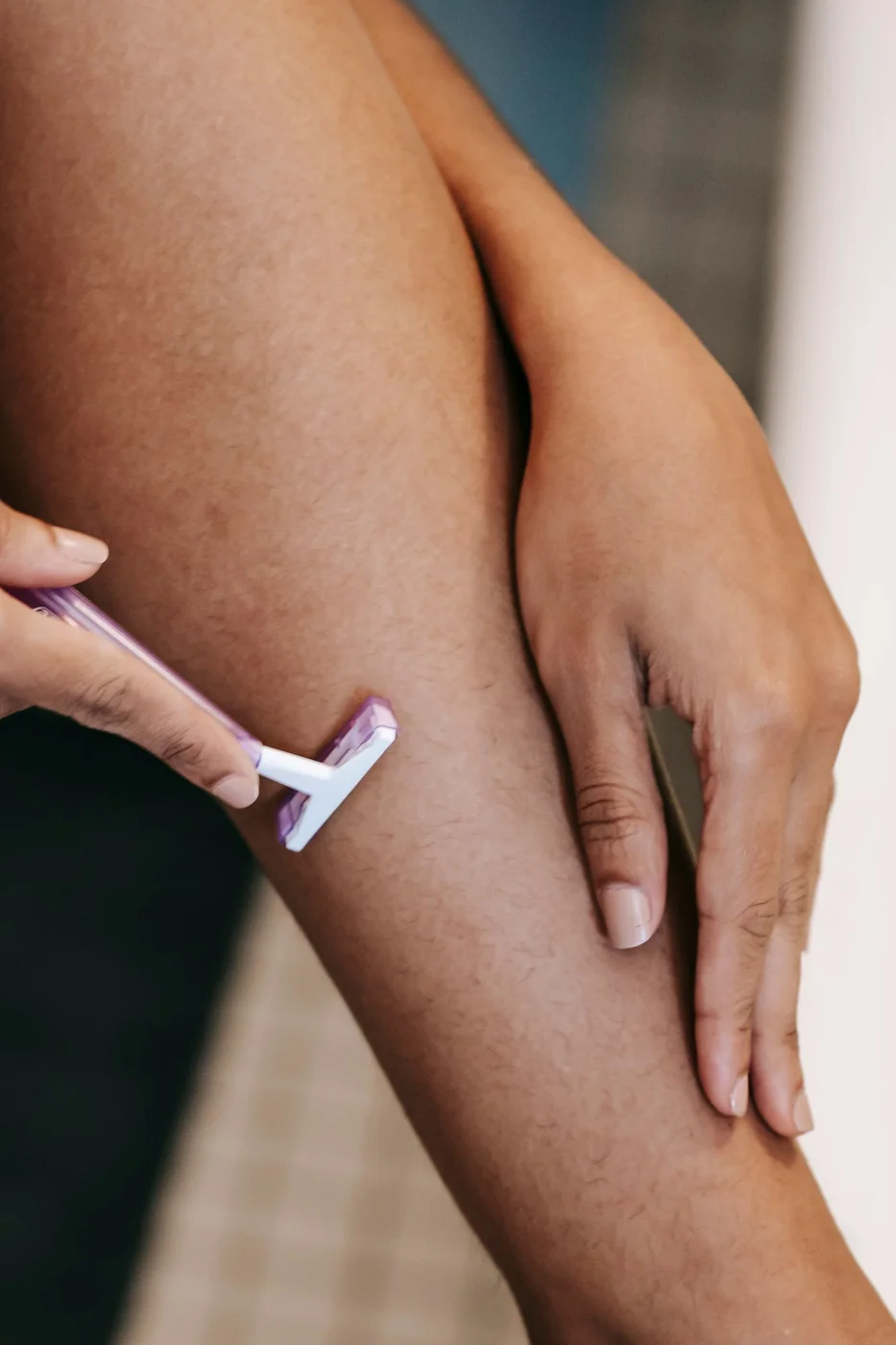
The arrow on a shaving illustration can make hair growth look wonderfully orderly. Real growth patterns are less cooperative. A section near a knee may point differently from the hair lower down the leg; an underarm may have more than one direction within a small area. A single long stroke can cross several of them.
Before shaving, look at the area in good light. Notice the direction in which the hair lies instead of assuming that upward or downward is correct everywhere. There is no need to draw a map or inspect every strand. You are looking for broad changes that explain why one movement feels comfortable in one place and catches in another.
The American Academy of Dermatology advises shaving in the direction of hair growth, with skin and hair softened by water and an appropriate shaving product. Shorter, controlled passes can make it easier to follow a changing pattern. Rinse the razor between strokes so you can work with a clear blade rather than repeatedly dragging through collected hair and product.
A comfortable pass is enough
Chasing the closest possible finish can turn a quick grooming choice into repeated work over the same patch. Pause before making another pass. A little remaining texture may be preferable to continuing when the skin feels uncomfortable. You do not need to obtain the same result on every area or shave every time you shower.
Set up the space so direction is not the only thing you are trying to manage. Have the product and towel ready. If reaching an area requires balancing on one foot on a wet floor, change the setup or leave that area for another time. Do not rush through a difficult angle simply because the water is running.
An electric shaver may have a different recommended motion from a manual blade, so consult its instructions rather than transferring every manual-razor technique. Likewise, a product intended for one body area is not automatically suitable for another. Read the packaging before using unfamiliar equipment or creams.
If shaving repeatedly leaves painful irritation or bumps, stop treating the problem as a test of persistence. A dermatologist can help distinguish what is happening and discuss alternatives. For ordinary grooming, the useful observation is modest: which direction feels easier, which places need more care, and whether you want to shave today at all. Those answers are more relevant than the promise of a perfectly smooth finish.