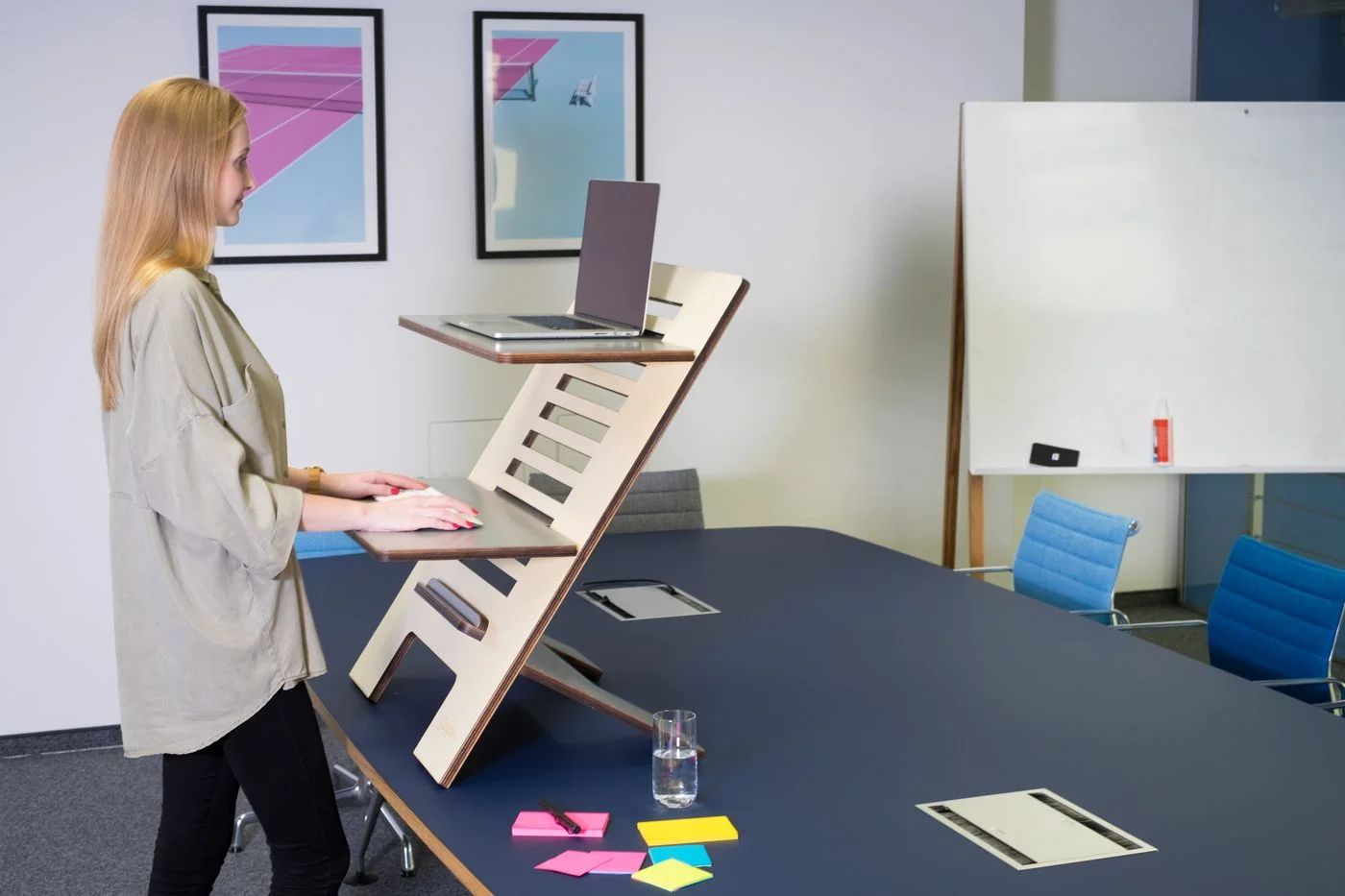
A standing desk can look like a complete solution to a sedentary workday, but the useful feature is usually the ability to vary the setup. Remaining in one position for hours, whether seated or standing, can still feel uncomfortable. Think of the desk as an adjustable tool rather than a rule about how you should work.
Before raising it, check the equipment and cables. The monitor, power supply and accessories need enough clearance and slack to move safely. A cable stretched tight at the highest setting can pull an item from the surface or damage a connection.
Fit both positions
Arrange the keyboard and pointing device within a comfortable reach. The screen should be easy to view without constantly lifting or lowering your head. If the desktop moves but a shelf or wall-mounted screen does not, the standing setup may need a separate adjustment.
Keep a suitable chair available rather than moving it so far away that sitting becomes inconvenient. The transition should be easy. Clear the floor around the desk and make sure a mat, if used, does not curl or create a trip edge.
Try standing during a familiar task that does not demand your full attention to the change itself. Notice whether you shift comfortably or find yourself bracing against the desk. Adjust the arrangement rather than treating discomfort as proof that you need to build endurance.
Use movement beyond the desk
Changing height is not the same as taking a walk or another movement break. Leave opportunities to move away when your work and abilities allow. A refill, a brief trip across the room or a comfortable change of position can provide variety without a complicated schedule.
If you use a reminder, keep it flexible enough to respect meetings and concentration. The aim is not to reach a daily standing quota. You can change sooner when uncomfortable or remain seated for a task that works better that way.
Persistent pain, swelling, numbness or other symptoms deserve professional advice. Individual conditions may affect which positions are suitable, so follow relevant guidance instead of copying another person's schedule.
Review the setup after a week of ordinary use. The most successful feature may be something small: a button at an easy height, a cable route that stays clear or a chair that rolls back into place smoothly. An adjustable desk earns its cost by making useful variation easier, not by keeping you upright at all times.