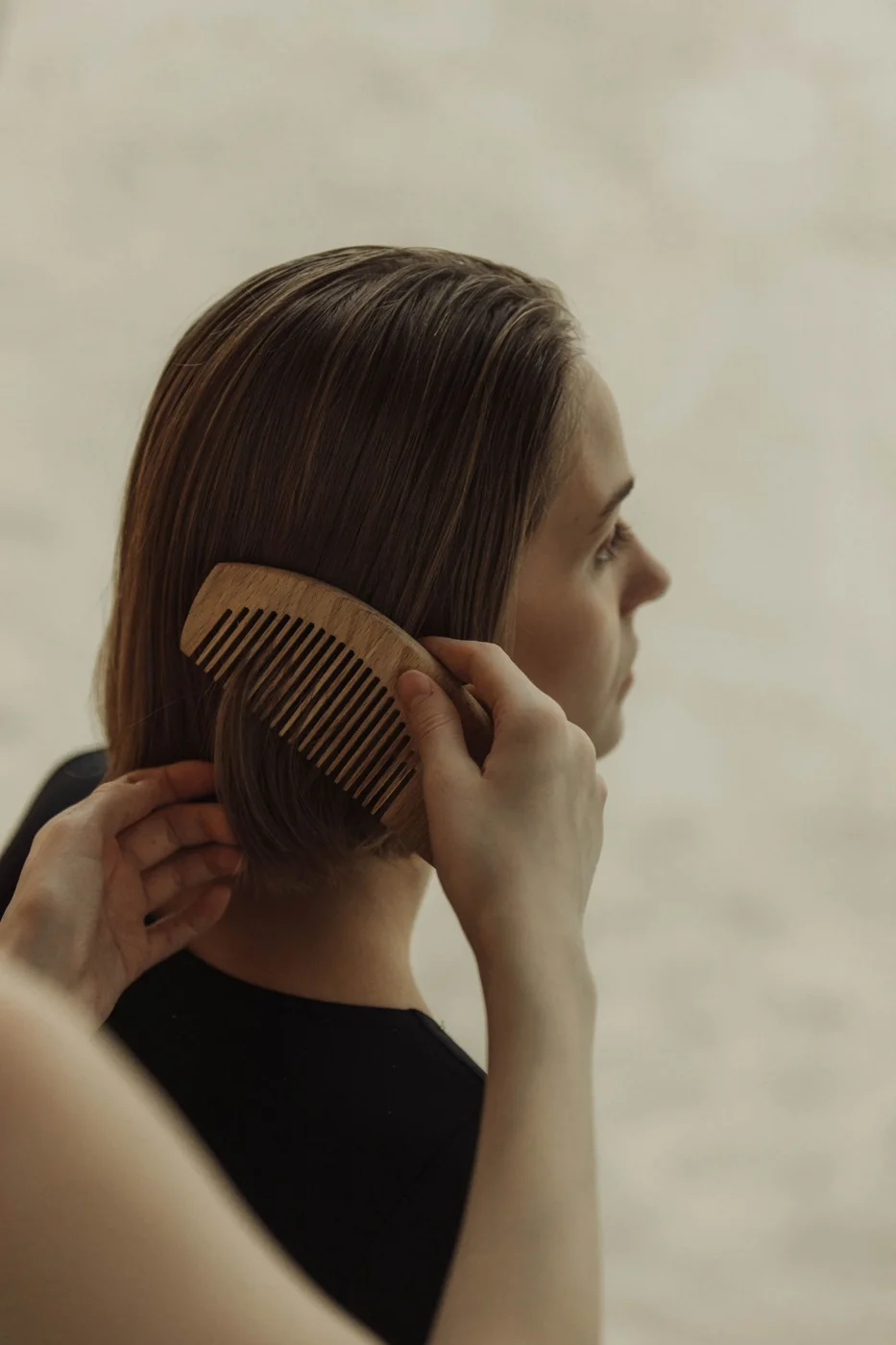
A brush can move smoothly through the top of straight hair and stop abruptly at the ends. Repeating the same long stroke usually does not make the knot easier to understand. Pause, find the tangled area and work on that section instead of pulling the entire length through it.
Use a tool in good condition, with smooth teeth or bristles and no rough seams that catch. Remove accumulated hair from the brush before starting. A tool full of yesterday's strands is harder to inspect and may be less pleasant to use.
Work in manageable pieces
Separate the hair so you can hold the section comfortably. Start with the lower tangled area and move upward as it becomes easier to pass through. Support the hair rather than letting every tug reach the scalp. If a knot remains stubborn, use patience and an appropriate product or professional advice instead of cutting impulsively near skin you cannot see.
Wet hair needs careful handling. Follow your conditioner and styling-product directions, and avoid treating a hurried brush-through as an automatic part of stepping out of the shower. The right timing and tool may differ with length and the condition of your hair.
Look at the places tangles gather. A coat collar, scarf or sleeping arrangement may affect the back of the hair. This does not mean you must avoid those items; it helps you plan a gentle check before a small knot becomes a larger one.
Keep the task proportionate
Brushing is not a quota to complete. Once the hair is manageable for the style you want, repeated strokes may add time without solving another problem. You do not need to produce a perfectly smooth curtain of hair before tying it loosely for an ordinary day.
If you regularly need force to get through the same area, consider whether the tool, haircut or care routine needs adjustment. A stylist can help assess a practical handling issue. Scalp pain, sudden changes or unusual hair loss deserve healthcare advice rather than a stronger detangling tool.
Finish by putting the brush somewhere clean and removing loose hair as appropriate. A small amount of maintenance makes the next detangle easier to begin. The useful skill is noticing where the resistance starts and responding gently, rather than learning to pull through it more quickly.