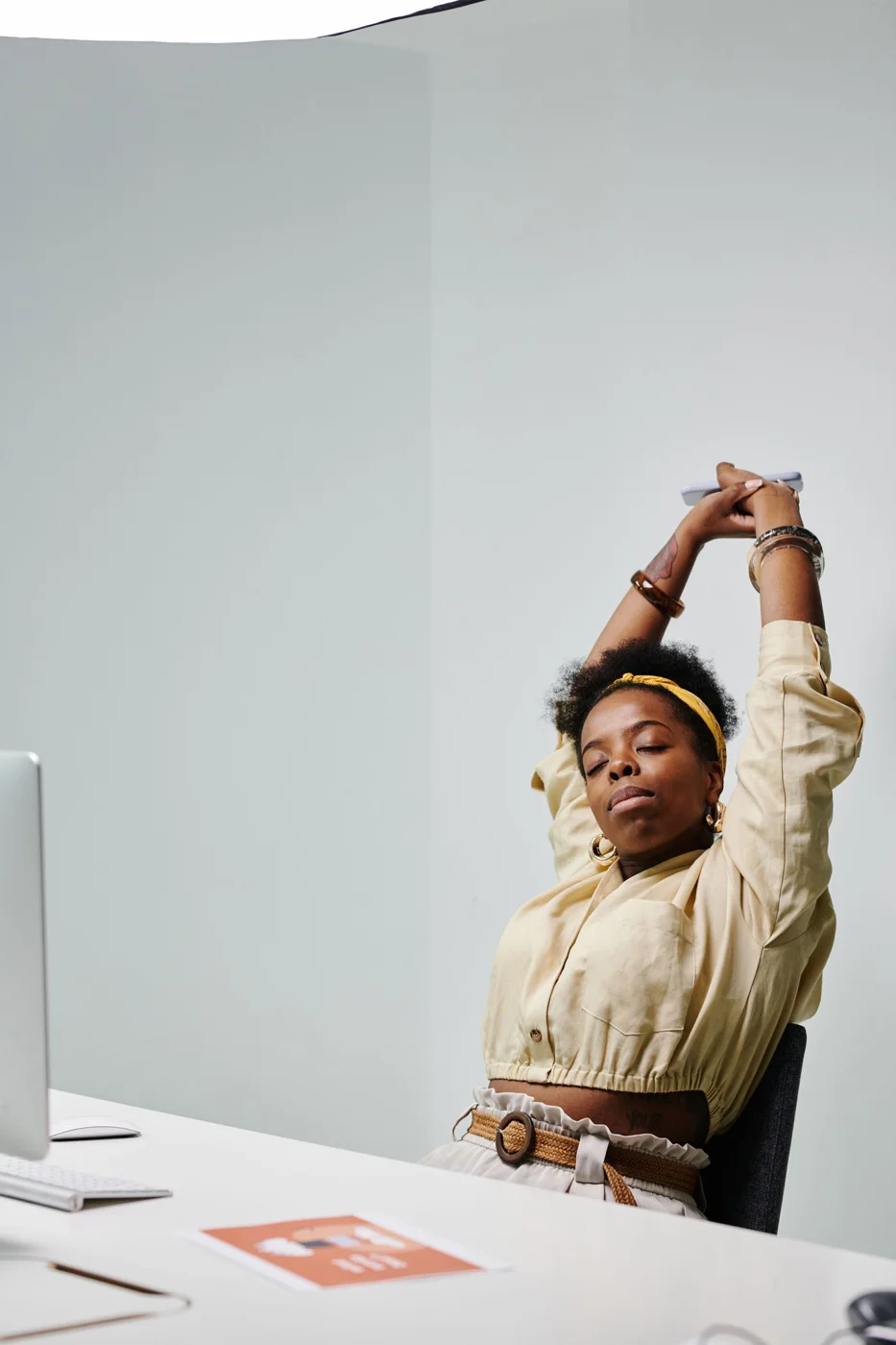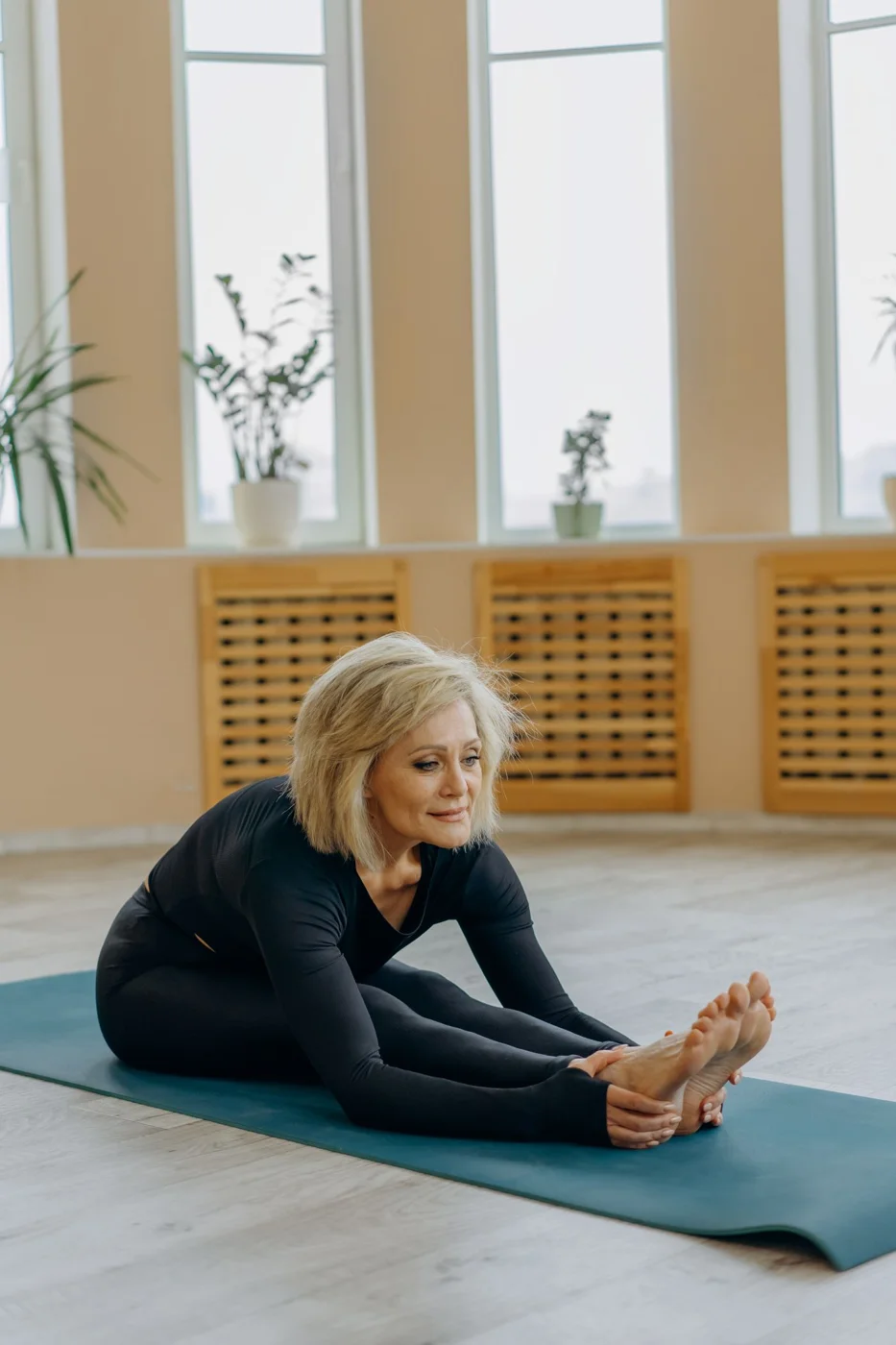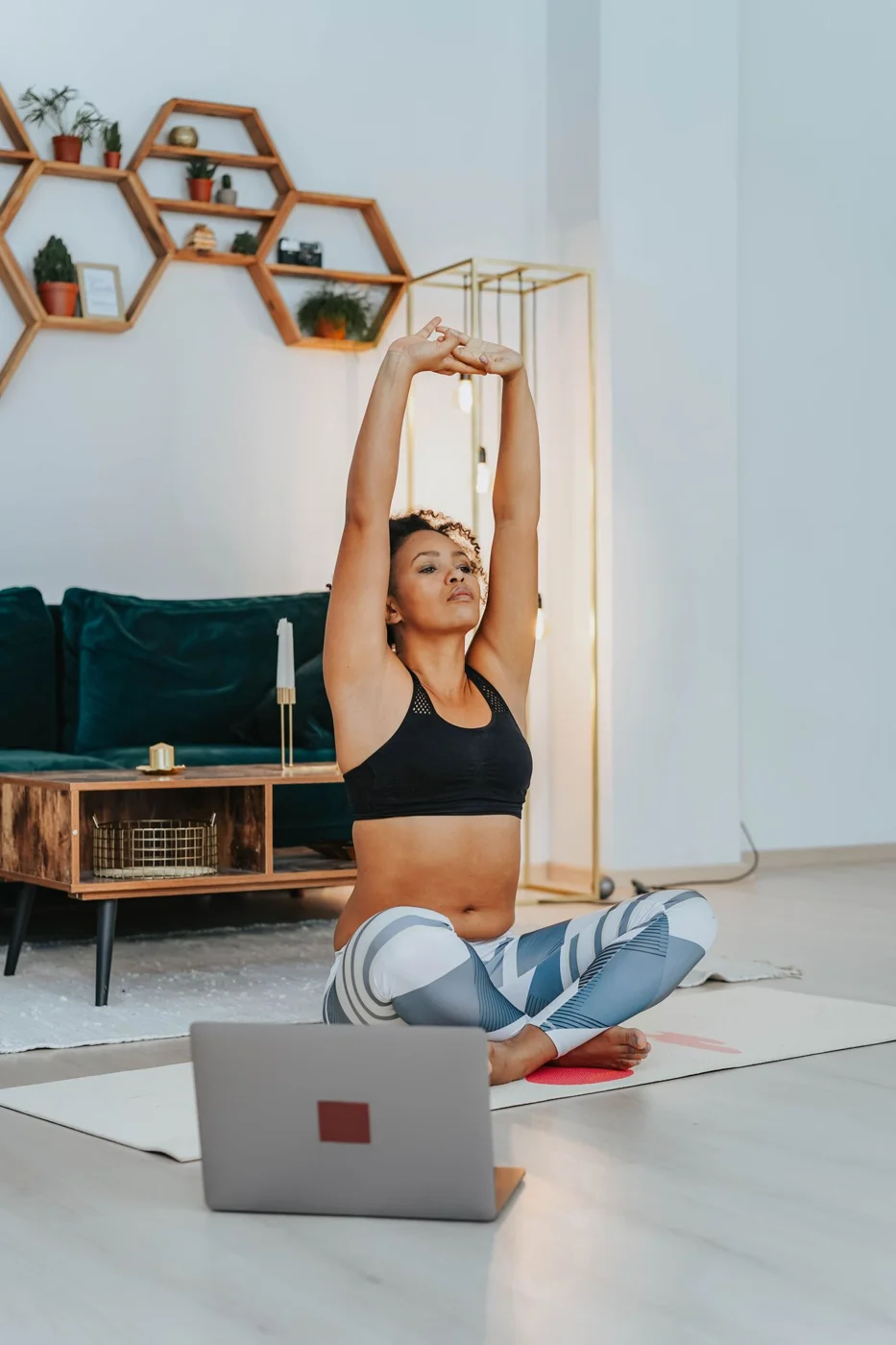
Stretching can become competitive even when nobody else is present. A photograph suggests a shape, a video moves quickly and you find yourself trying to reach farther than feels comfortable. For an ordinary break, there is no need to reproduce the most dramatic version of a movement.
Choose a familiar stretch or movement that suits your abilities. If you have an injury, a condition affecting movement or uncertainty about what is appropriate, get individual guidance from a qualified professional. A short article cannot assess your range of motion or explain why something hurts.
Prepare the space before moving
Use a stable surface with enough clearance. Move bags, loose rugs and cables, and check that a chair or support will not roll or tip. Wear clothing that lets you move comfortably rather than spending the whole break adjusting a waistband or sleeve.
Begin gently and avoid bouncing or forcing a position. You should be able to breathe comfortably. Pain, dizziness, numbness or other concerning symptoms are reasons to stop, not signs that the stretch is finally working.
Keep the movement within a range you control. You do not need to reach the floor, straighten every joint completely or match another person's position. Differences in bodies and experience make visual comparison a poor guide to what you should do.
Give the break a modest size
One or two comfortable movements may fit better than a long sequence. If you are following instructions, read or watch them before starting so you are not twisting to see a screen while holding a position. Choose instruction from a qualified source and avoid claims that one stretch fixes every desk-related problem.
Notice whether you are using stretching to tolerate an awkward setup. A screen that is too hard to see or a keyboard that requires constant reaching may need adjustment as well. Repeatedly stretching around the same inconvenience does not make the workstation suitable.
After the break, return to your task in a comfortable position and allow variety through the day. You do not need to hold one supposedly perfect posture until the next reminder.
A useful stretching habit can remain quiet and unremarkable. It is an opportunity to move comfortably, not a test of flexibility or a treatment plan. If symptoms persist, seek advice rather than increasing the force or duration of a movement that is not helping.