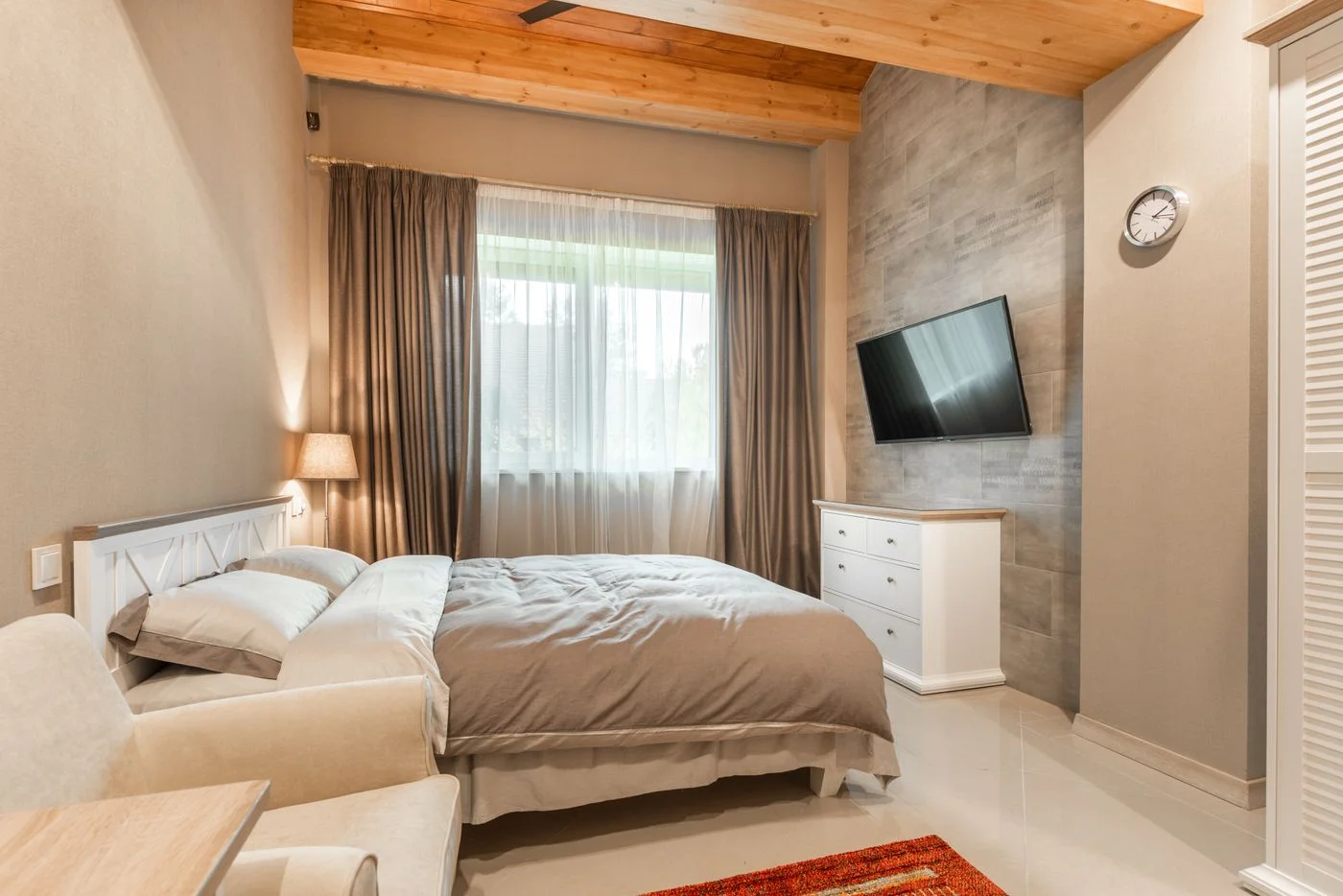
The first few minutes in a hotel room are a good time to solve problems that become irritating later. You can find the light switches, check the curtains and decide where the suitcase belongs while you still have enough energy to look around.
Start with the route between the bed, bathroom and door. Keep bags, shoes and charging cables out of that path. Check how the room door locks and where the nearest exit is, following the property's safety information. Familiarity matters more than making the room look unpacked.
Learn the room's controls
Try the thermostat and fan settings before bedtime. Some systems take time to respond, and repeatedly changing the setting can make it harder to understand what is happening. If the controls do not work or the room remains uncomfortable, contact the property rather than trying to modify equipment.
Close the curtains and look at the edges from the bed. A small gap may be easy to fix by repositioning the fabric. Do not cover smoke detectors, vents or emergency lighting. If the room has a bright decorative display, use its normal controls or ask staff how to turn it off.
Choose a charging location on a stable, dry surface. Keep devices out of the bedding and make sure your charger is suitable for the local outlet and voltage. An extension cable across the bathroom entrance is not a good solution to an inconvenient socket.
Unpack for the night you have
Set out only the items needed before morning: toiletries, sleepwear, glasses and the next day's essentials. A short stay may not require emptying every compartment. Put small belongings together so checking out does not become a search behind furniture.
If you use an alarm, confirm its time zone and settings. A bedside clock left by a previous guest may have an unexpected alarm enabled, so check it as well. Keep the hotel's contact method available in case a practical issue arises.
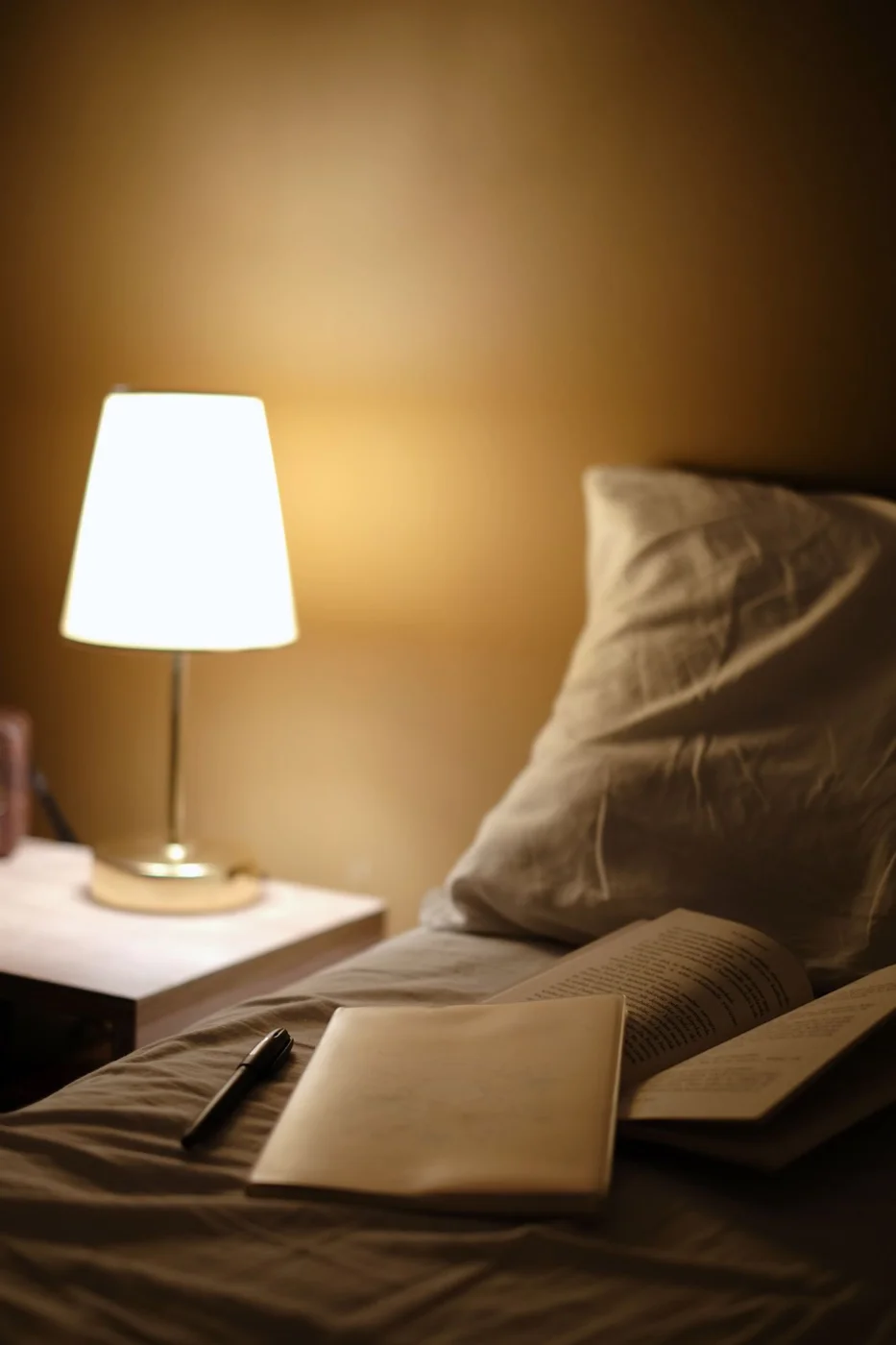
A familiar book or comfortable sleepwear can make the room feel less unfamiliar without filling your luggage with special equipment. Expect the setting to be different from home. The aim is to remove obvious obstacles and make the room usable, not to reproduce every detail of your own bedroom on the first night.