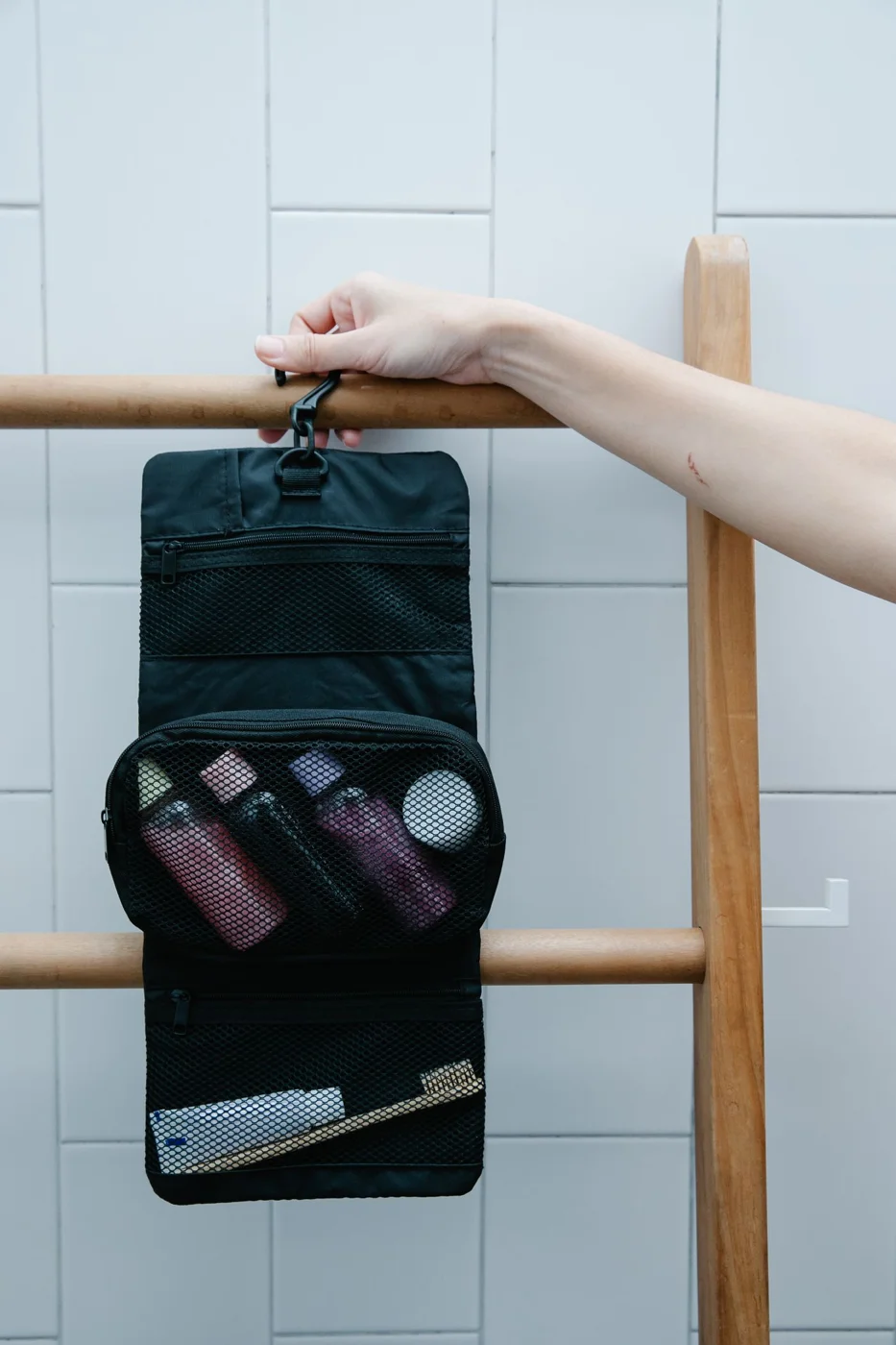
Four identical white bottles look tidy in a travel pouch. They are less convenient when the label washes off and you cannot remember which one contains cleanser. Travel packaging should make a short routine easier, not remove the information that keeps it understandable.
First decide whether the product should be transferred at all. Read its directions and ask the manufacturer if you are unsure about compatibility or packaging requirements. A factory-filled travel size may be the simpler option. Keep sunscreen, medicines and products with important storage or handling requirements in their original labeled packaging rather than treating every formula as suitable for a generic pot.
If decanting is appropriate, choose a container intended for the kind of product you are carrying. A wide opening may suit a thick cream but make a thin liquid hard to control. A pump can be convenient at home yet difficult to secure in a bag. Check the material and closure instructions instead of relying on the word travel on the label.
Label before filling
Write the full product name on the container while it is clean and dry. Add any distinction that matters, such as a shade or whether it is a rinse-off product. Keep a photograph of the original directions and ingredient panel available, but do not rely on a photograph as a substitute for a clearly identified bottle.
Clean and dry reusable containers according to their maker's instructions. Do not pour new product on top of an old, unidentified remainder. If the container cannot be cleaned or inspected adequately, choose another solution. Avoid mixing different formulas to use up small amounts or fit everything into fewer bottles.
Fill only what makes sense for the trip, leaving the space recommended for the closure to work. Test that the lid closes securely before putting it beside clothing. An additional pouch can contain a leak, but it does not repair an unreliable cap.
Check the current liquid and baggage rules for your route and transport method separately. A container sold as travel size is not a guarantee that every security checkpoint will accept it. Original capacity markings can be useful when those rules apply.
When you return, identify what remains and decide how to handle it using the product's guidance. Do not leave partly filled mystery containers waiting for the next trip months later. A few readable labels and suitable closures are more valuable than a perfectly matching set.