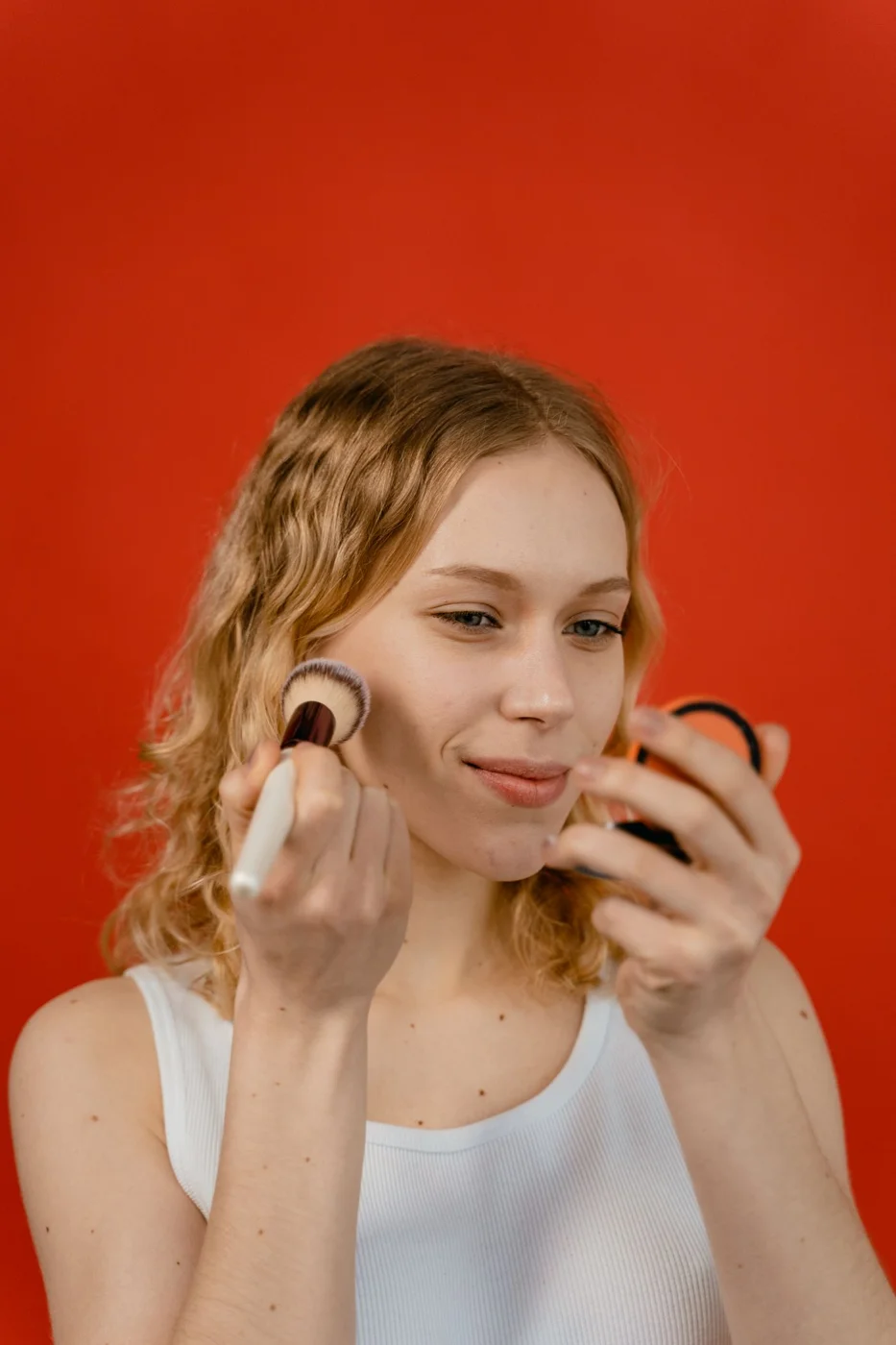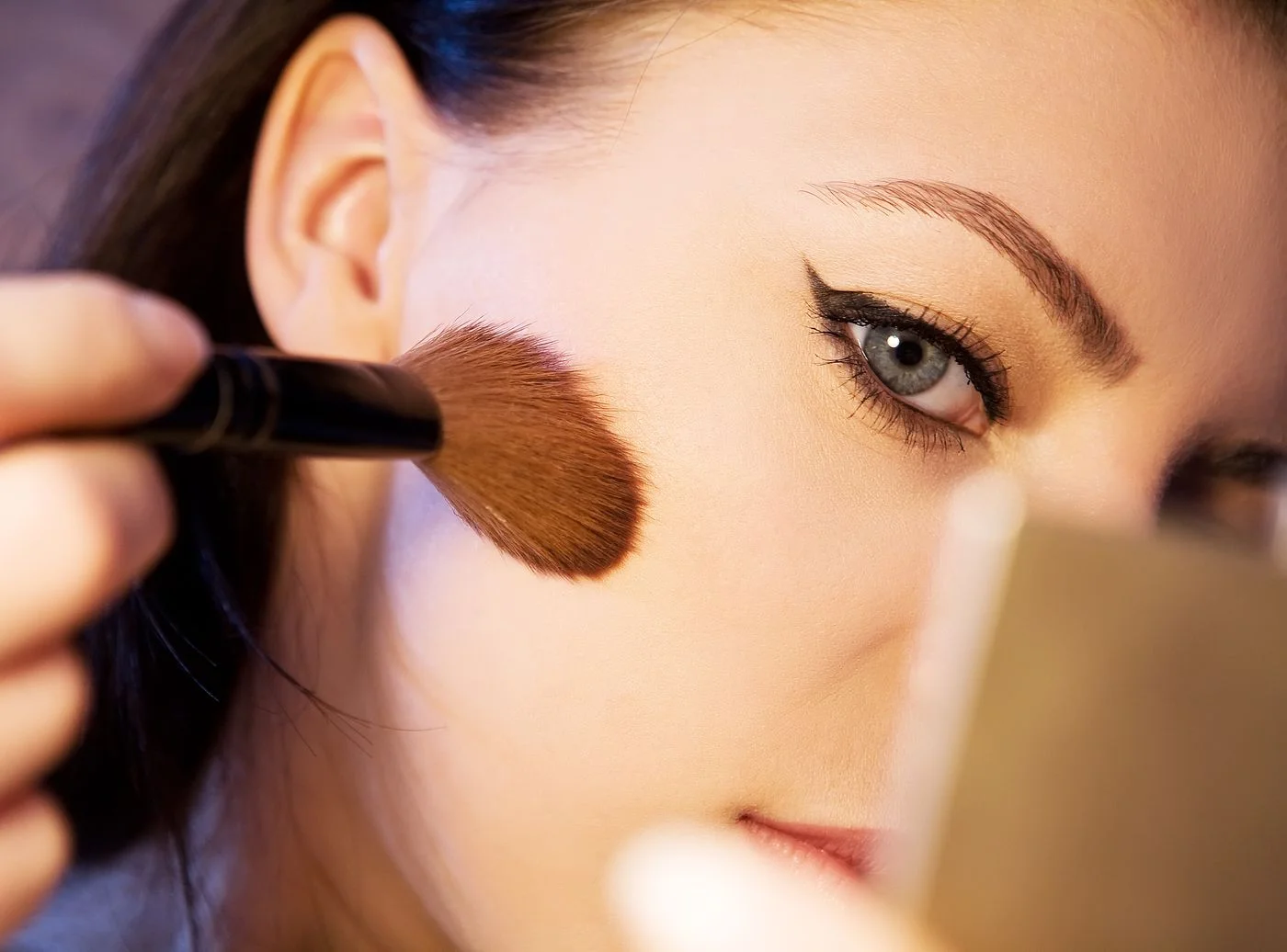
Blush placement charts make faces look unusually easy to classify. Real cheeks move when you speak, smile and turn your head. Rather than trying to fit your face into a diagram, choose the effect you want to see when your face is relaxed.
Sit in even light and look straight into the mirror. Place a small amount of blush where you want the color to be most noticeable, keeping the first patch narrower than the finished area you imagine. Then soften its edges. Starting small lets you move outward by choice instead of spending the rest of the application trying to erase a broad stripe.
Check both sides without expecting them to be identical. Your hair part, lighting and natural facial shape can make a perfectly symmetrical application look uneven. Turn your head in each direction and judge the overall balance rather than measuring the distance from every feature.
If the color has traveled farther than you wanted, first use a clean tool to soften the edge. Avoid immediately putting a new layer of foundation over the entire cheek. That can replace a placement problem with a texture problem and make a minor correction feel like a complete restart.
A strong color does not always need a strong shape. You might keep a brighter shade in a smaller area and blend a very soft border. Conversely, a muted color can cover more space without becoming the main focus of the face. Experiment with the blush already in your bag before deciding the shade itself is wrong.
On a day when you have time, photograph one placement in ordinary light, remove it properly and try another. The photographs are a memory aid, not an objective beauty test; camera processing changes color. Write down what you liked in person as well.
The useful outcome is a placement you can recognize and repeat. It might be slightly higher, more central or simply less extensive than your old habit. There is no obligation to create a lifting effect or correct your face. Blush can be a small area of color that you enjoy seeing in the mirror, without an explanation about what your features ought to become.