The mirror at a cosmetics counter is only one setting. A shade that seems quiet under bright overhead lights can look noticeably pink or golden beside a window. Before deciding that a formula is wrong for you, separate the question of color from the question of lighting.
Choose two or three plausible shades rather than drawing a whole row across your face. Label their positions in a note so you do not have to remember which was which. If a retailer provides samples, take them home with the exact shade names. Follow the product's directions for any testing; a color match does not establish that a formula will agree with your skin.
Look at the boundary
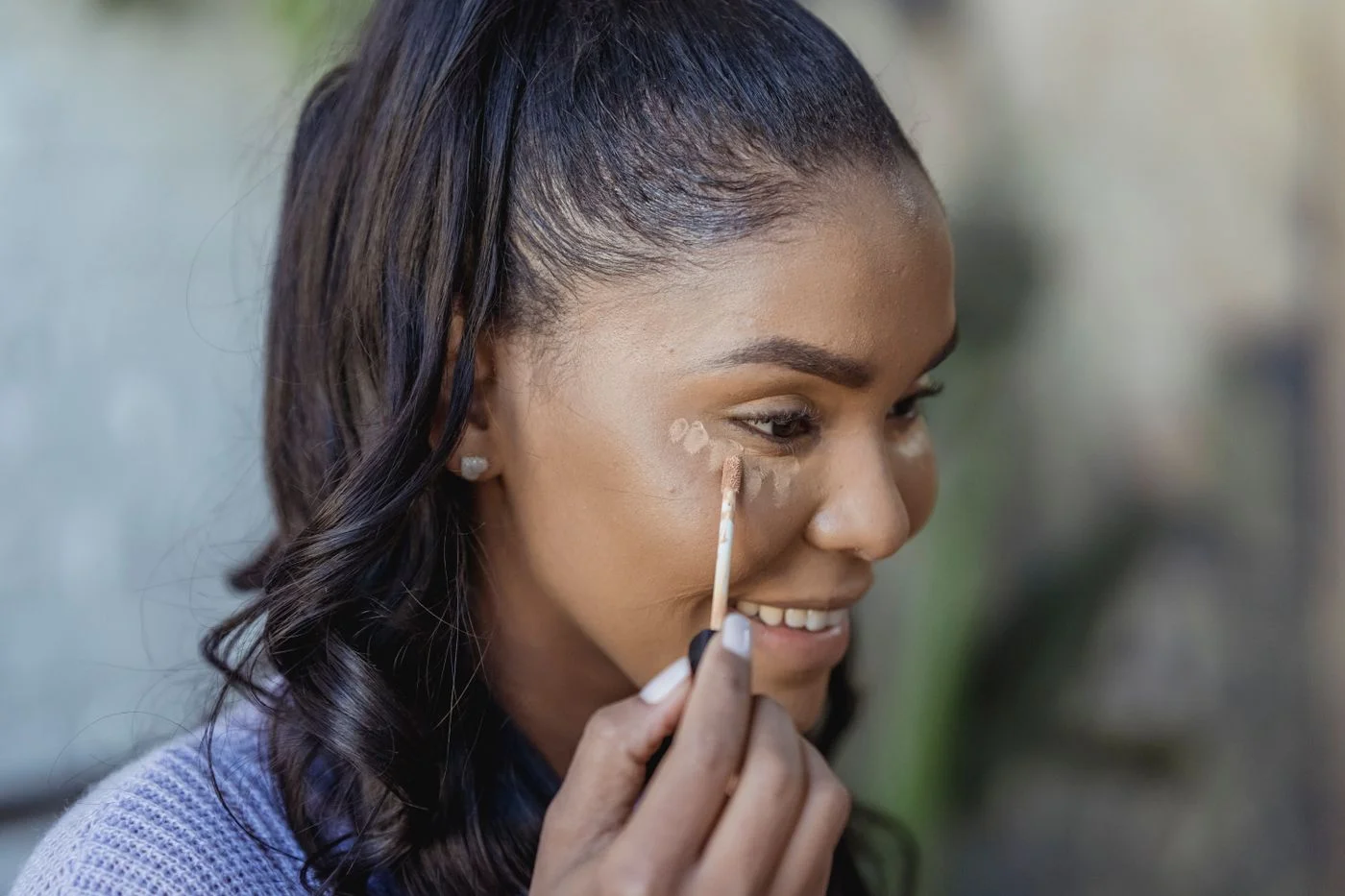
Use a small amount in the area where you normally blend foundation toward your neck. You are looking for the transition between covered and uncovered skin, not simply the shade that appears brightest on its own. A pale stripe can look attractive under a spotlight and still create a visible edge in ordinary daylight.
Step back to a normal conversation distance. Look straight ahead and then turn slightly. A magnified close-up can be useful for seeing texture, but it makes a tiny difference seem more important than the whole effect. Check beside a window without standing in a hard beam of sun, then in the indoor lighting you commonly use.
If your face and neck differ naturally, there may not be a single shade that disappears everywhere. Decide which transition matters to you. You might prefer a sheer finish with selective concealer rather than extending opaque foundation over a much larger area.
Give the sample a normal day
Wear the sample with the products you already use beneath makeup, following their directions. Note whether the color looks different later, and whether the change appears across the face or only where products overlap. Take a written note as well as a photo: phone cameras adjust color and exposure automatically.
Record the shade, finish and what you disliked separately. “Too yellow, comfortable texture” is a more useful shopping note than “bad foundation.” It lets you keep a promising formula on the list while changing the color, instead of starting the entire search again.