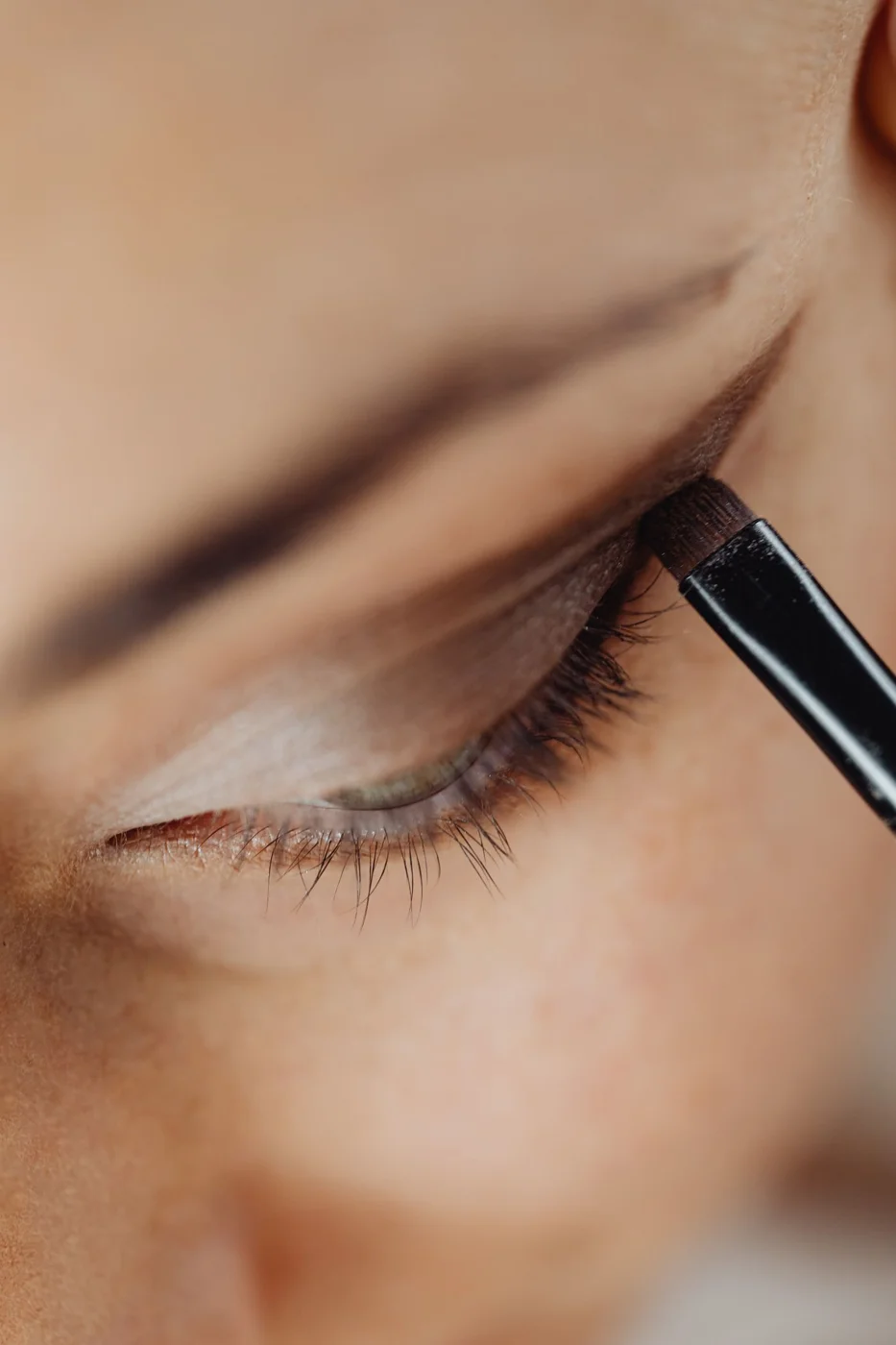
The idea of a single perfect eyeliner stroke is appealing until your hand hesitates halfway across. A few short, controlled sections can be easier to join than a long line is to repair. You can also stop before the line becomes heavier than you intended.
Set the mirror where you can see without leaning awkwardly. Rest your arm if that makes your hand steadier, and apply eye makeup while stationary. The FDA advises against applying eye cosmetics in a moving vehicle because an applicator can injure the eye during a sudden movement.
Begin with the part of the line that matters most to your look. That might be a small definition near the outer lashes rather than a line across the whole lid. Use an eyeliner intended for the eye area, follow its placement directions and keep both the cosmetic and applicator from touching the eyeball. This routine concerns the external eyelid; do not put cosmetics inside the eye. Do not improvise with other cosmetics as liner.
Instead of pressing harder when a section looks faint, check the tip and the amount of product. A dried or unsuitable applicator can encourage unnecessary pressure. Follow the manufacturer's care instructions; adding liquid to revive a formula is not a reliable fix.
Leave space to assess the shape
Look forward with your face relaxed between sections. A line drawn while pulling the skin taut may look different when you release it. Short pauses let you see the actual shape you will wear rather than only the shape visible during application.
If you want a small wing, sketch a modest version first. The two sides do not need to be measured copies. Compare the overall effect from a normal distance before extending either side. Repeatedly lengthening one to match the other can turn a subtle idea into a much larger look.
For a correction, use a method suitable for the product and eye area, following directions. Avoid scrubbing the same patch repeatedly. If your eyes become irritated, remove the cosmetic as directed and stop the experiment rather than trying to finish at any cost.
An everyday line can end wherever it looks balanced to you. It does not need a wing, a fully outlined eye or the darkest possible finish. The advantage of working in sections is that each section is a decision, including the decision that you have already done enough.