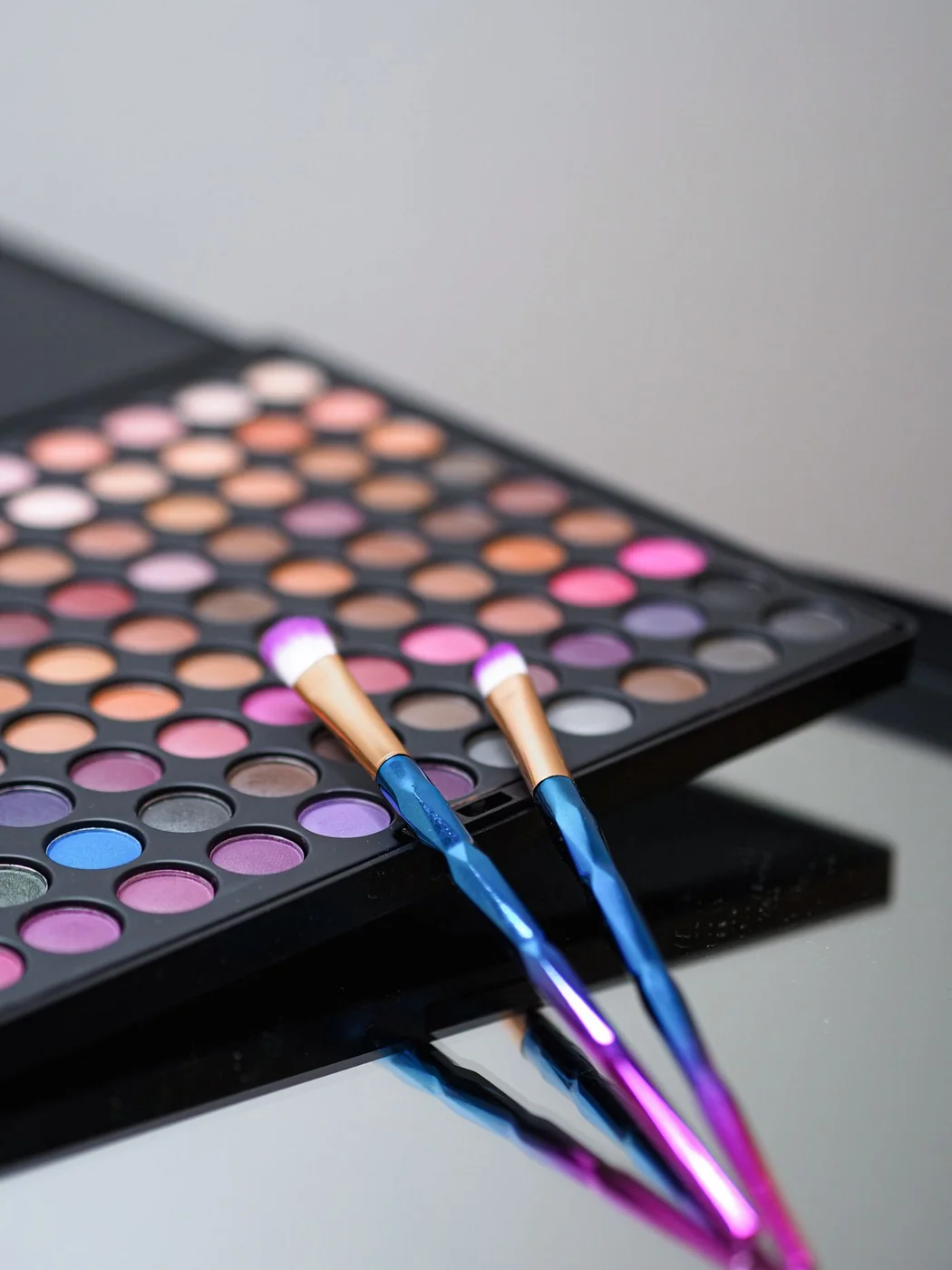
A large palette can make a simple eye look feel unfinished before you have begun. There are transition shades, accent shades and several colors that seem to require a special occasion. For an ordinary morning, two shades can be a complete choice rather than a compromise.
Pick the color you actually want to notice first. Then choose a second shade that has a clear supporting role: softening the edge, adding a little depth or bringing a different finish to a small area. If you cannot describe what the second shade contributes, try the first one alone before adding it.
Use products intended for the eye area, with clean appropriate tools. Keep application gentle and follow the product's directions. A color that looks appealing elsewhere in a makeup kit is not automatically suitable around the eyes.
Keep the first shape simple
Apply the main shade in a small area you can see with your eye relaxed. Look forward occasionally rather than keeping the eyelid stretched throughout the application. The shape you see with the eye closed may look quite different once you open it.
Add the second color only where you want a change. A deeper shade can stay near a small outer section; a softer shade can help blend a border. You do not need to use equal amounts or create a symmetrical diagram of several zones.
Clean the brush appropriately between colors, or use a separate clean tool if that suits your setup. A brush carrying both shades can make it difficult to understand which one is making the result darker. That is a practical reason for a second brush, not a requirement to build a large collection.
After the first attempt, note whether you liked the colors together and whether the placement was comfortable to repeat. Those are separate questions. A promising pair of shades may need a smaller shape rather than a third color to rescue it.
Keep the pair together in your mental shortlist for busy days. Familiarity can make the process quicker without requiring a rigid routine. On another day you can experiment with the rest of the palette; an everyday look does not have to demonstrate everything the palette contains.