Foundation can look comfortable across the cheeks and gather at the sides of the nose. That local problem does not necessarily mean you need a completely different formula. A crease, a little extra product or repeated touching may be enough to change how the area looks.
Start with the application you can see. If several products overlap there—moisturizer, sunscreen, primer, foundation and concealer—make a note of the order and how much you use. Do not remove necessary sun protection to make the makeup sit differently. Instead, look for cosmetic layers you can simplify and follow the directions for the products underneath.
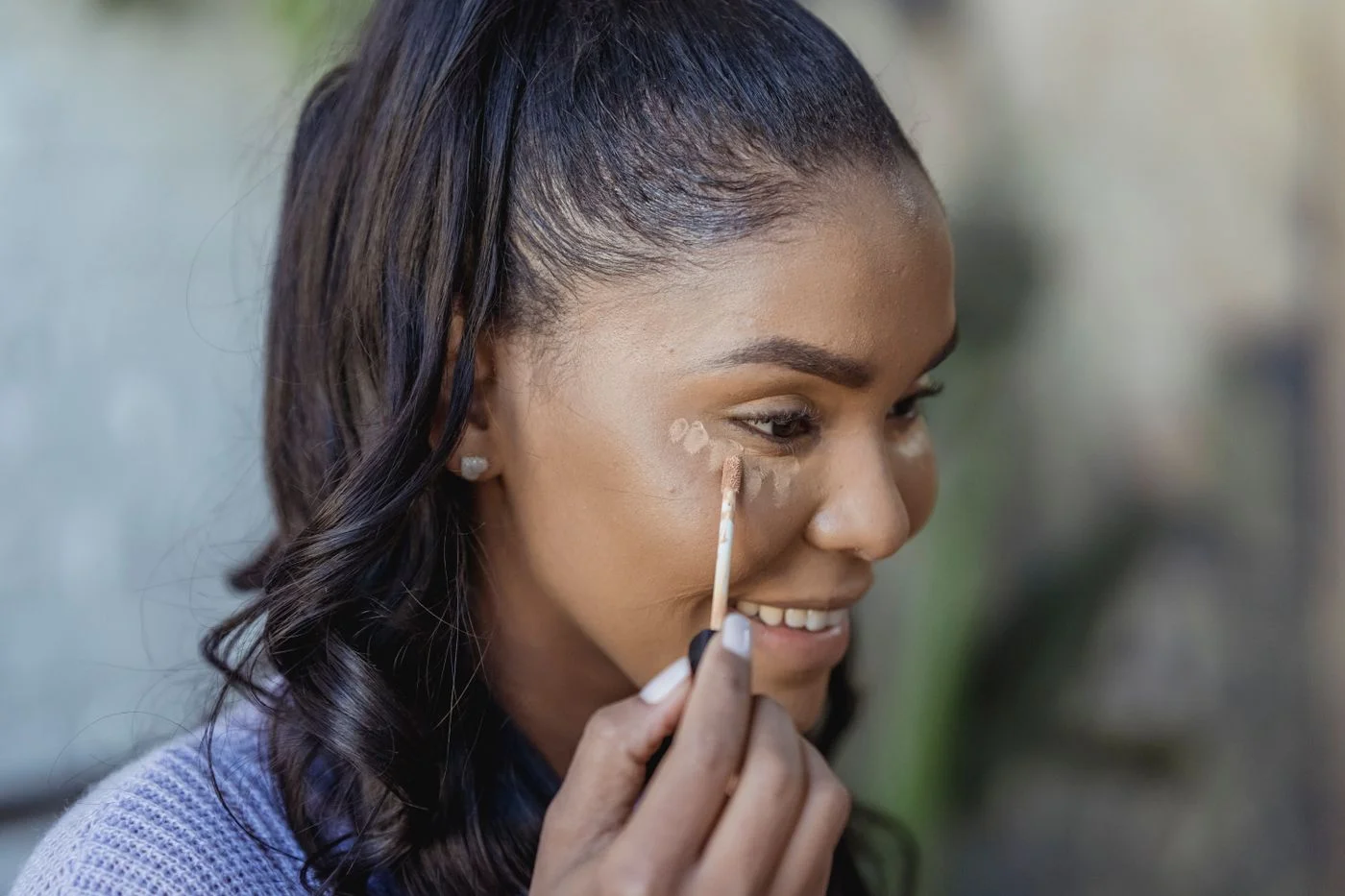
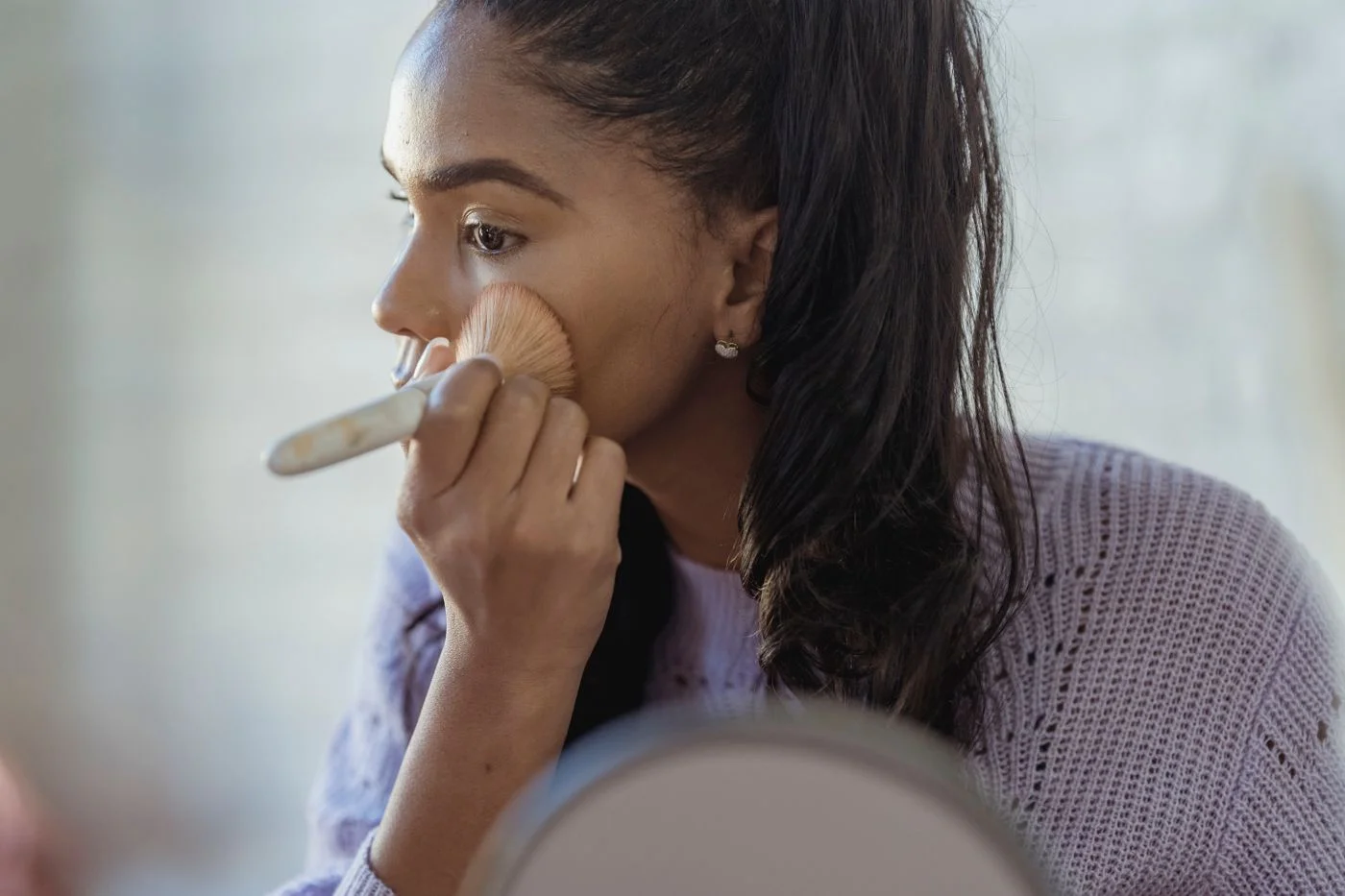
Use a smaller amount of foundation beside the nose than on a broad cheek area. Blend toward the crease rather than depositing a fresh dot directly inside it. A small clean brush or the narrow part of your usual applicator can make it easier to control placement, provided the tool is suitable for the product.
Remove the excess before covering it
When makeup has collected in a fold, another coat often makes the buildup more obvious. Gently lift or redistribute the excess with a clean appropriate tool. Check the result before adding anything. Sometimes the surrounding foundation already provides enough coverage once the thick edge is gone.
Notice when the problem begins. Gathering during application suggests a different adjustment from makeup that shifts after glasses have rested on your nose for hours. Keep those observations separate. A new setting powder may not address a placement issue that happens before powder is involved.
If the area is flaky or uncomfortable, avoid repeatedly rubbing it to make the surface look smooth. Makeup is not a treatment for irritated skin. Pause the cosmetic experiment if it worsens discomfort, and seek advice for persistent irritation rather than trying to hide it with more layers.
For an ordinary day, it is also reasonable to leave this small area less covered. Check your face at a normal distance rather than judging a crease through a magnifying mirror. A little visible skin can look more consistent with the rest of your face than a concentrated patch of foundation that demands repeated repair.