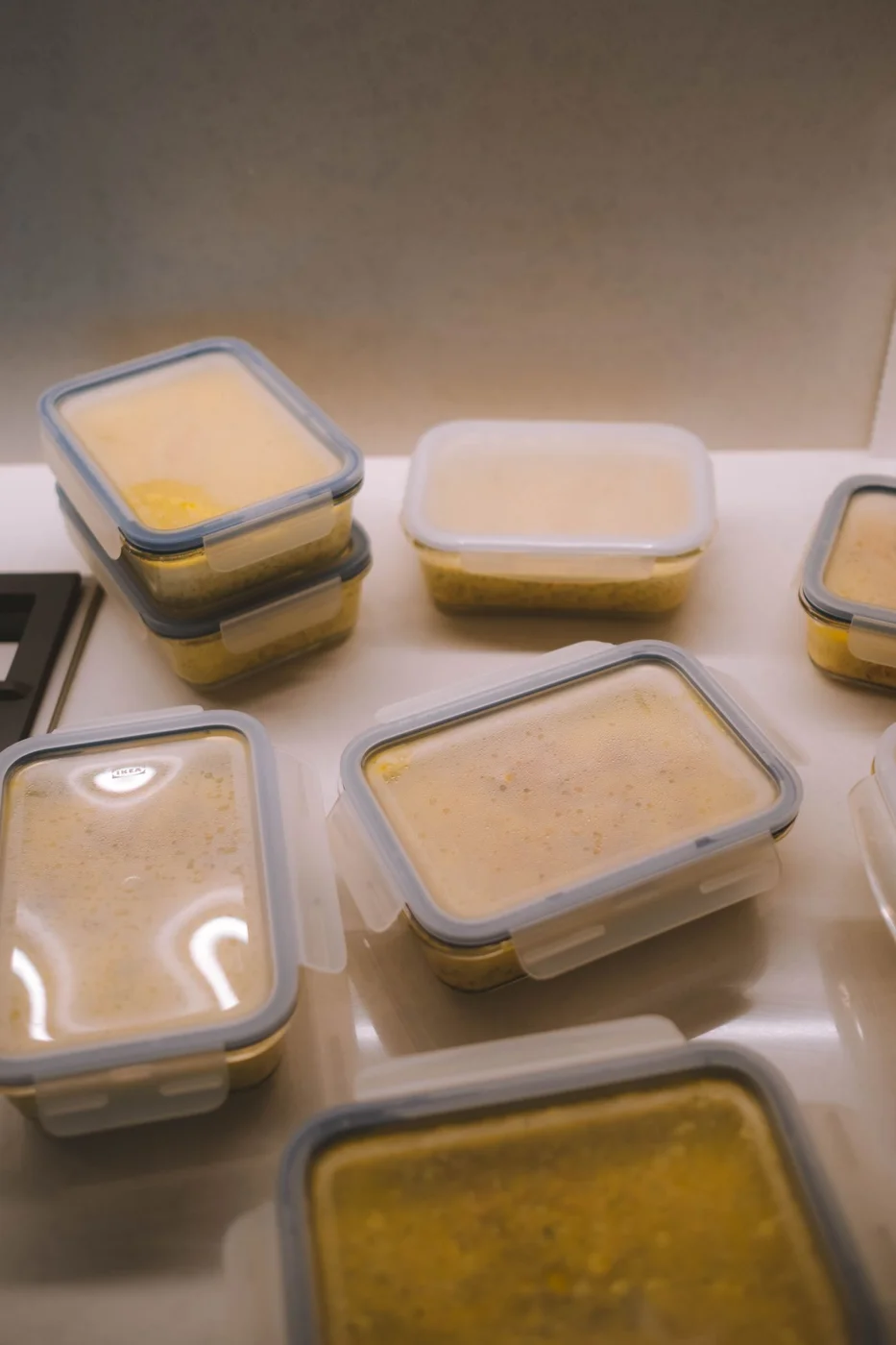
A covered container can hold a useful lunch or an unanswered question. Without a label, soup begins to resemble sauce, dates blur together and deciding what to eat requires opening every lid. A short label makes the food easier to recognize and gives the next meal a clearer starting point.
Write the name of the food and the date it was prepared or opened, as appropriate. Add a brief note if it matters: contains dairy, spicy, or use with rice. Keep essential ingredient information available for anyone with an allergy rather than relying on a vague nickname.
Label before the container disappears
Keep a suitable marker and removable labels near the storage containers. The system should work with wet hands and an ordinary evening cleanup, not require a search for special stationery. Write clearly enough that another household member can understand it.
Put perishable leftovers away promptly. USDA advises refrigerating within two hours, or within one hour when the surrounding temperature is above 90°F, and using shallow containers to cool larger amounts. A label does not compensate for food left out too long.
Use refrigerated leftovers within the recommended three-to-four-day window, or freeze suitable portions while they are still safely within their storage period. Follow more specific guidance when the food requires it. Do not wait until you are doubtful about a container and then treat freezing as a reset.
Give the food a likely destination
A label can include a meal idea if it saves a decision: lunch bowl, soup base or dinner side. Keep the note realistic. A small amount of cooked vegetables may be an addition rather than a complete meal, and acknowledging that makes it easier to use.
Store containers where they can be seen without blocking airflow in the refrigerator. Move older suitable items forward, but do not combine leftovers of different ages in a way that hides the earlier date. The contents still carry their own storage history.
Choose containers that close properly and suit reheating if that is intended. Follow the container's instructions; a lid safe for storage may need different handling in a microwave. Use a food thermometer and appropriate reheating guidance rather than judging safety from steam alone.
Remove the label when the job is finished
Wash and dry the container, then clear the old date before the next use. A permanent mark that remains through several meals can be more confusing than no label. If labels leave residue, choose a method compatible with the container rather than scraping it with a tool that causes damage.
The system succeeds when it helps you identify, plan and use food safely. It does not need color coding or a perfectly uniform refrigerator. A readable name and a reliable date can answer the questions that otherwise make leftovers easy to forget.