When clean and used tools share the same open cup, it becomes difficult to remember which is which. The solution does not have to be a large organizer. Two clearly different places can be enough: one for ready-to-use tools and another for tools waiting to be cleaned.
Choose holders that suit the actual shapes. A tall brush needs support without being packed so tightly that the head is bent against another tool. Small applicators need a place where they do not disappear underneath larger objects. Check that you can clean the holder itself according to its material and construction.
Put only fully dry tools into enclosed storage when their care instructions require drying first. A lid can keep dust away, but it also changes the environment inside. Do not use a sealed case as a shortcut around the drying stage.
Make the distinction visible
The two storage areas should be different enough that you do not have to remember an elaborate system. A small tray for tools used today and a separate clean holder may work better than several identical compartments. If other people share the space, label the areas in a way they can understand too.
Keep tools personal. A shared bathroom does not require shared eye applicators or makeup brushes. Store each person's equipment so that a hurried morning does not turn into accidental borrowing.
Review the tools as you clean them. If a brush is always waiting in the used tray because it is awkward to wash, that is information about the routine. You may prefer a simpler tool or a different product next time. Avoid solving every storage problem by adding another container.
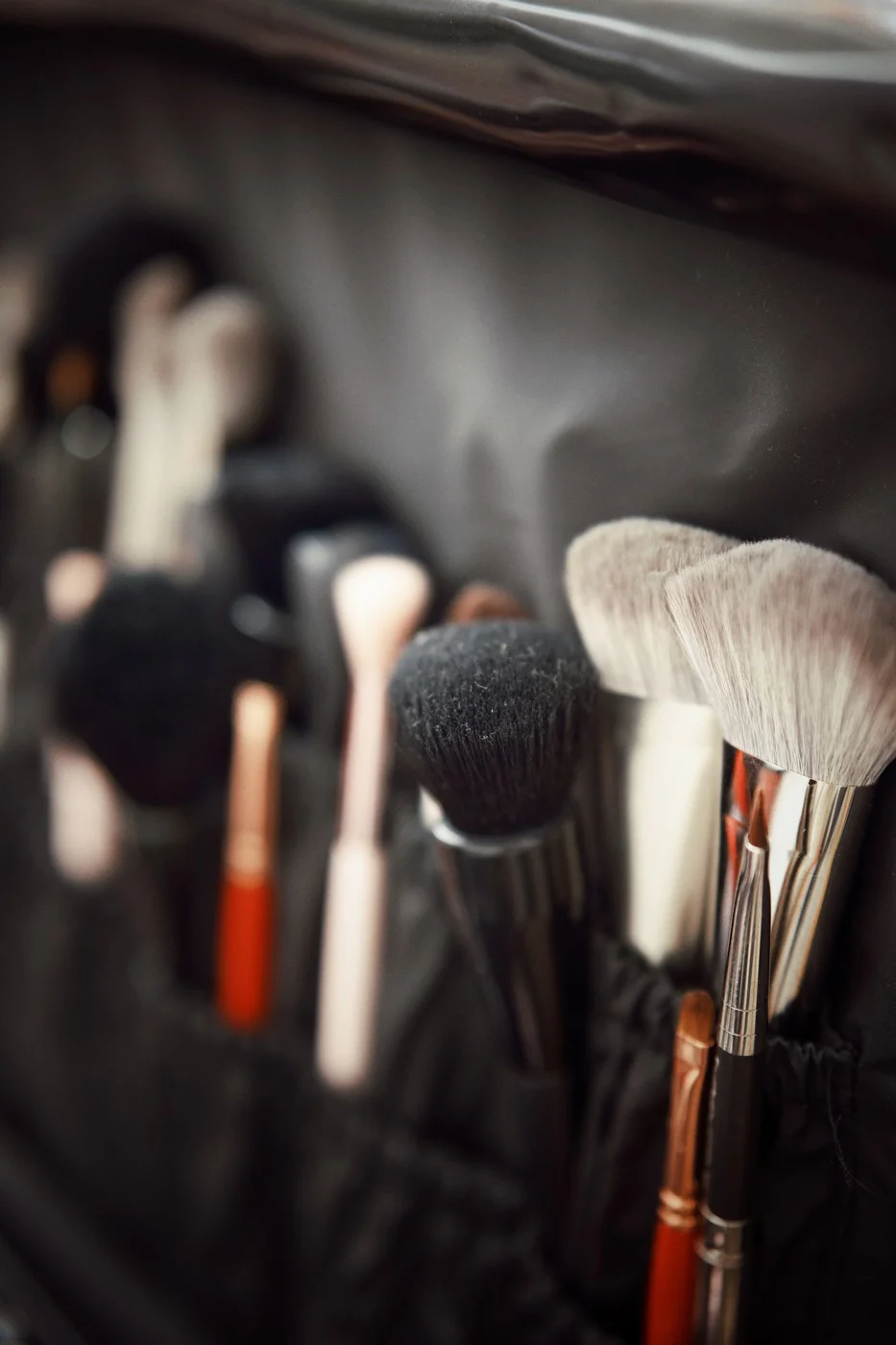
For a portable kit, use a case that protects clean working surfaces from cosmetic residue. Empty and clean the case as needed, following its directions. Dropping a newly washed brush into a powder-coated pouch blurs the distinction between clean and used. It is an easy habit to miss.
Keep the arrangement close enough to the makeup routine to be convenient, but away from repeated sink splashes. The system succeeds when putting a tool in the right place is the easiest available action. If it requires opening three drawers every morning, simplify it until the distinction can survive an ordinary rushed day.