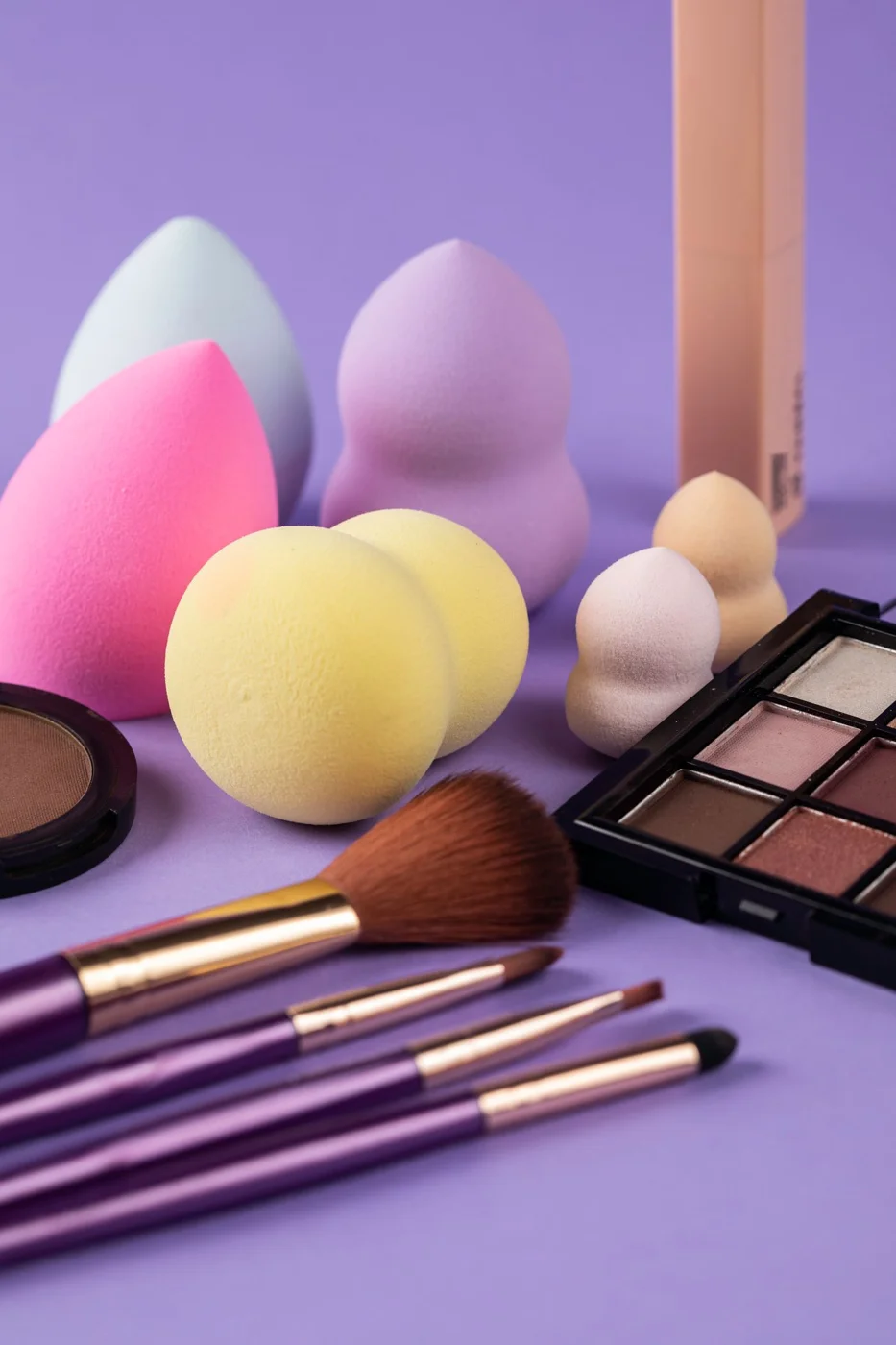
A makeup sponge often arrives with a neat case that looks ideal for a bag. Before closing a damp sponge inside it, check whether the case is meant for drying, transport or storage after the sponge is fully dry. Those are different jobs.
Follow the sponge manufacturer's directions for use and cleaning. Some products are designed to be dampened before application; others have different instructions. Do not assume every soft applicator should be soaked in the same way or cleaned with whichever household product is nearest.
After washing, remove excess water as directed without twisting or treating the material more roughly than intended. Set the sponge in a clean place with the airflow the product needs. Avoid leaving it pressed against used brushes, a dirty countertop or the bottom of a closed pouch.
Plan for the morning after
If you use the sponge daily, think about the interval between cleaning and the next application. A drying stand only helps if there is enough space and time around it. Placing it in the most crowded corner of a damp bathroom may make the routine less convenient than it looks on the package.
A second sponge is not automatically the answer. First decide whether you can make the care routine work for one. Buying several without a cleaning and storage plan simply gives you more tools to manage. If alternating tools genuinely helps them dry and stay organized, label or separate the clean ones clearly.
Watch for changes in the material and follow the maker's replacement advice. Do not keep using a sponge that is damaged, cannot be cleaned properly or develops an unusual appearance or odor. A familiar shape is not a reason to ignore a tool that no longer seems fit for use.
For travel, let the sponge dry before packing whenever possible. Keep a suitable transport container separate from clean cosmetics if there is any remaining residue. On arrival, unpack it instead of leaving it enclosed for the entire trip.
A useful setup is modest: one suitable cleaner, a clean drying location and a storage method that does not trap a freshly washed tool. It supports the sponge you actually use, rather than treating the applicator as a disposable-looking object whose care can be improvised later.