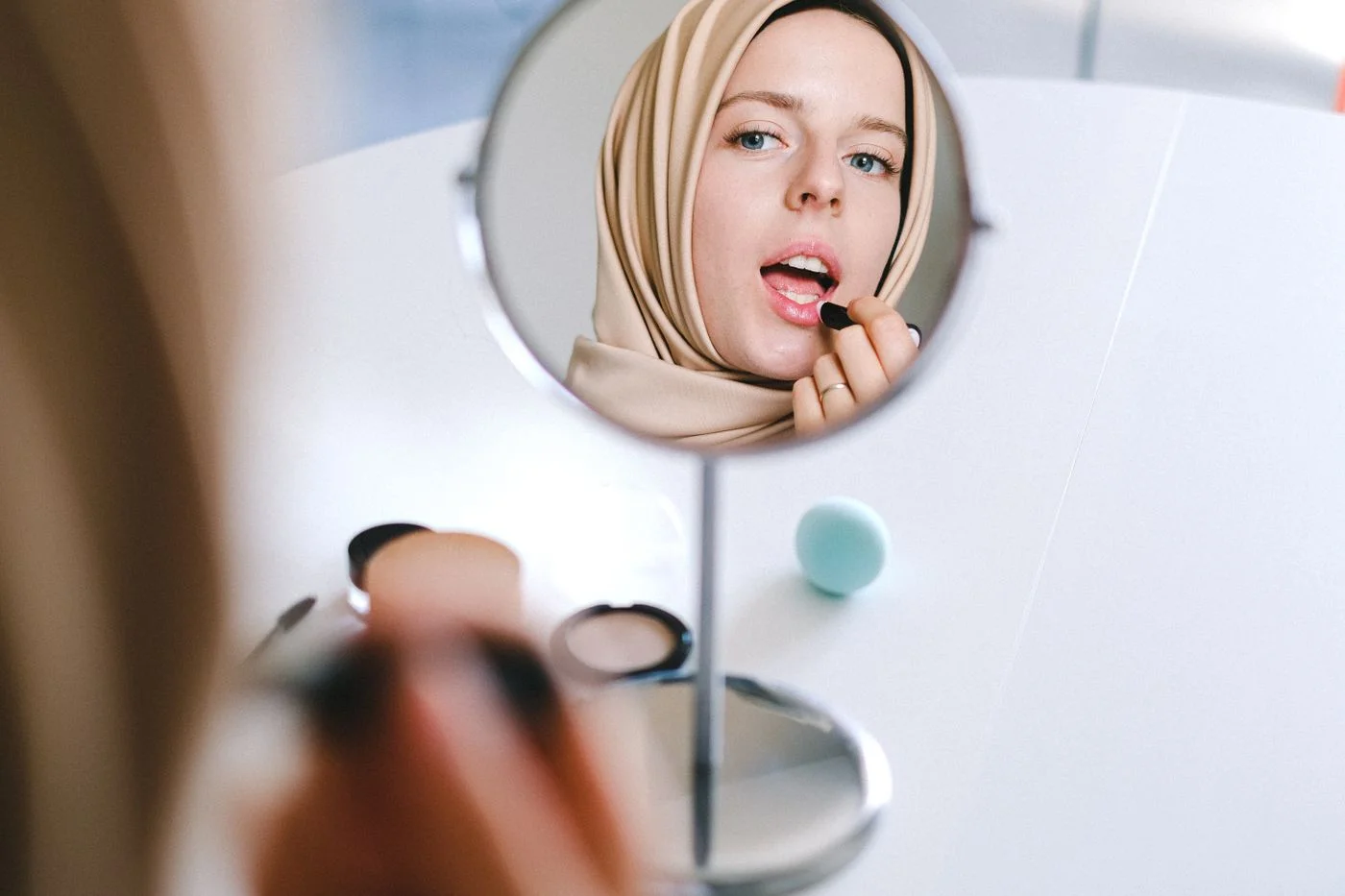
The small preview window on a video call is a strange makeup mirror. It combines room lighting, camera position, automatic exposure and sometimes a filter you did not realize was enabled. A flat-looking image is not necessarily a flat-looking face.
Open the camera preview before adding more product. Check whether a bright window sits behind you, leaving your face comparatively dark. Try a comfortable position with even light in front of or slightly beside you. Avoid staring into a harsh lamp just to improve the picture. The setup should be comfortable for the time you will spend there.
Look for beauty filters or appearance adjustments in the application if the picture seems unlike the ordinary mirror. Decide whether you want those features enabled. Their presence can make it difficult to tell what your makeup actually contributes, particularly if the software changes texture or contrast automatically.
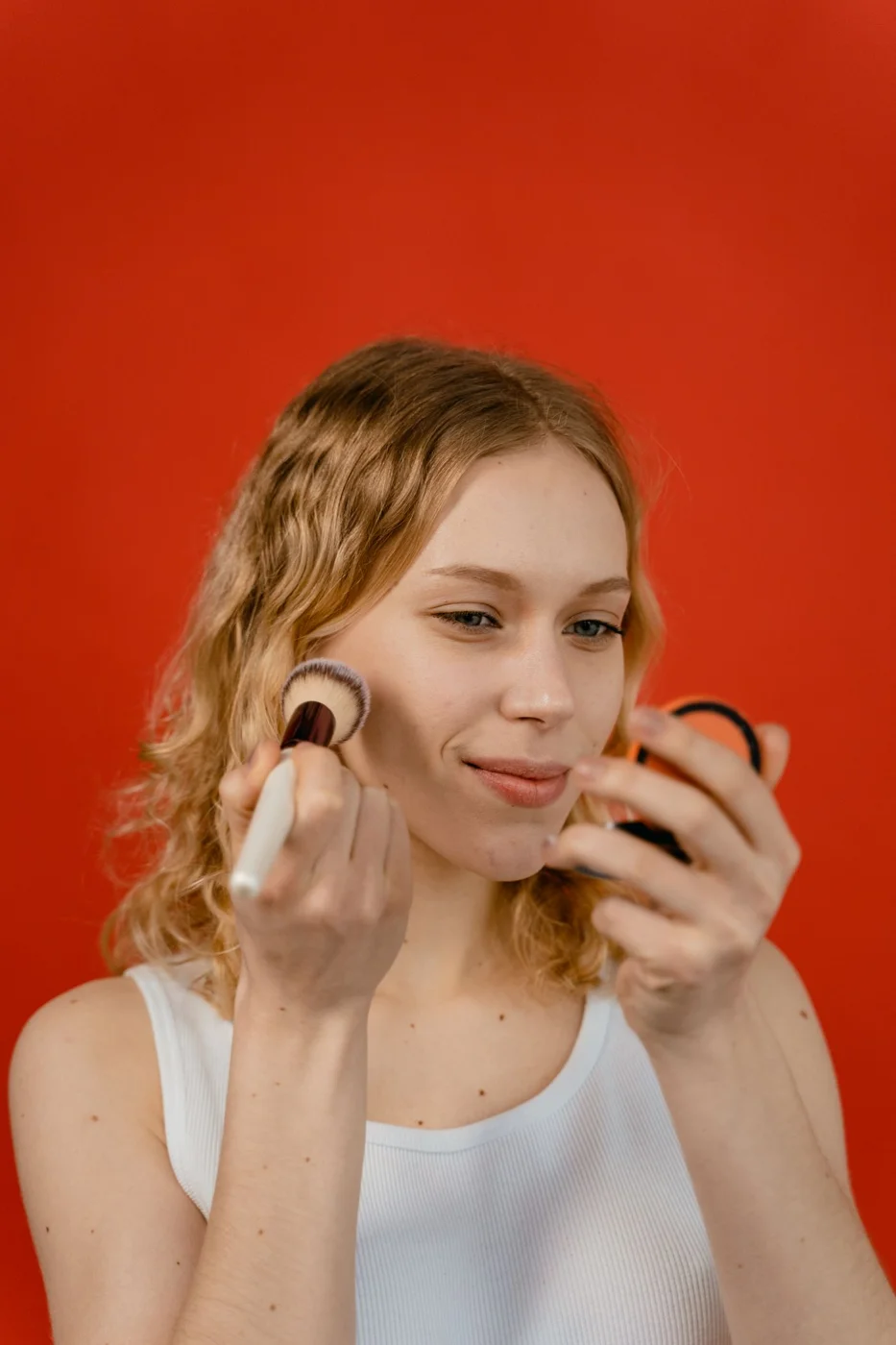
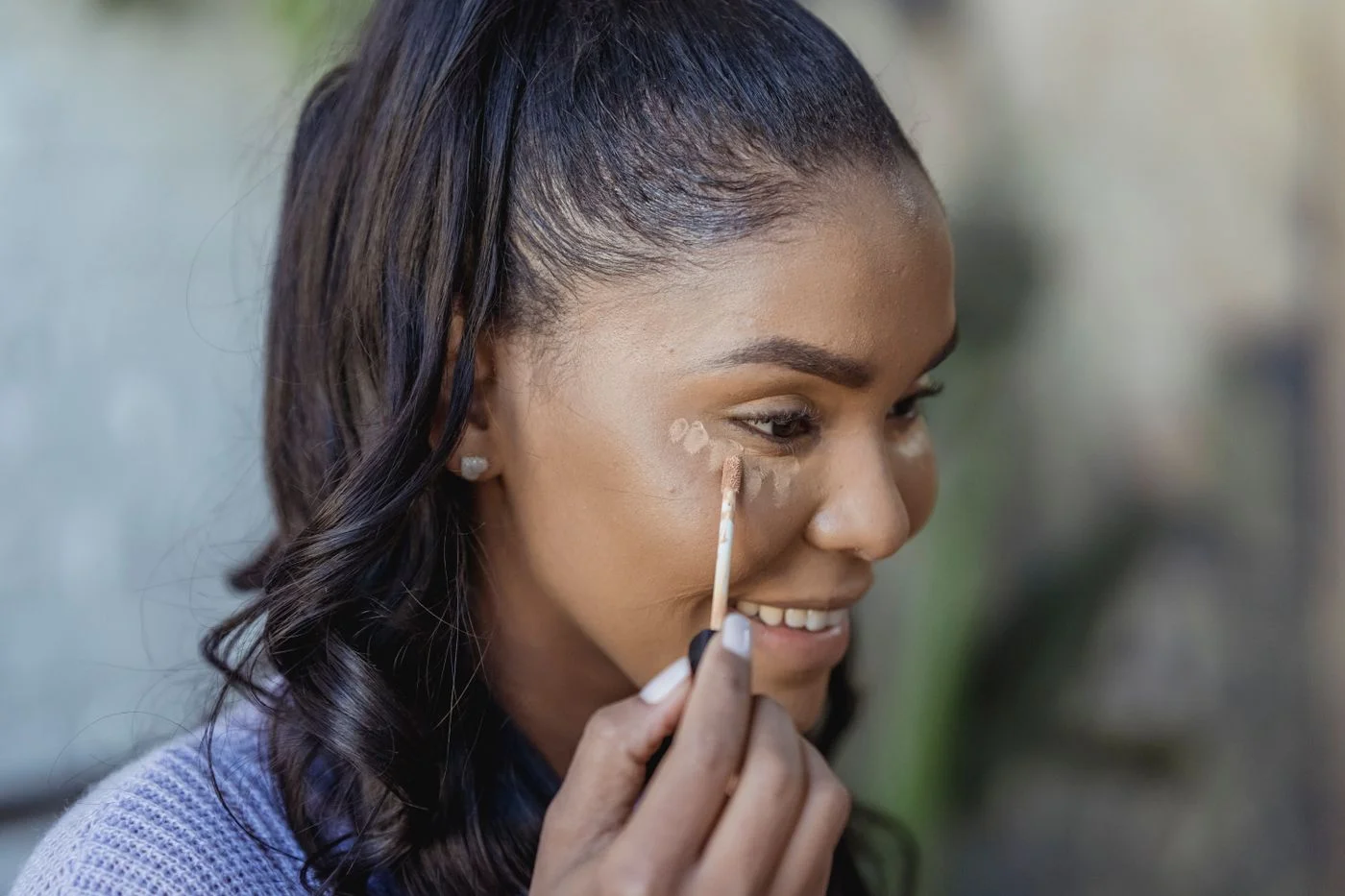
Once the room and camera are arranged, wear the makeup you normally like and assess it in that setting. If you want a little more color, change one area first. A touch of cheek or lip color may provide the definition you were missing without requiring a heavier base everywhere.
Give the camera a limited vote
It is easy to keep adjusting because the preview lets you watch your own face continuously. Compare the result once, then move your attention back to the conversation. You do not need to look as evenly lit as a professionally produced video to participate in an ordinary meeting.
If you leave the house after the call, check the makeup in regular light too. A look adjusted only for a dim camera may appear stronger in person than you wanted. Keep both settings in mind rather than treating the screen as the final authority.
Make a short note of a setup that works: which lamp, where the chair sits and whether the window shade is open. Repeating that environment can be easier than inventing a special makeup routine every time a meeting appears on the calendar.
You can also choose no makeup. A clearer picture is mostly a question of equipment and light, while cosmetics remain a personal preference. The purpose of the small preparation is to remove an unnecessary distraction, not to create another standard you must meet before speaking on camera.