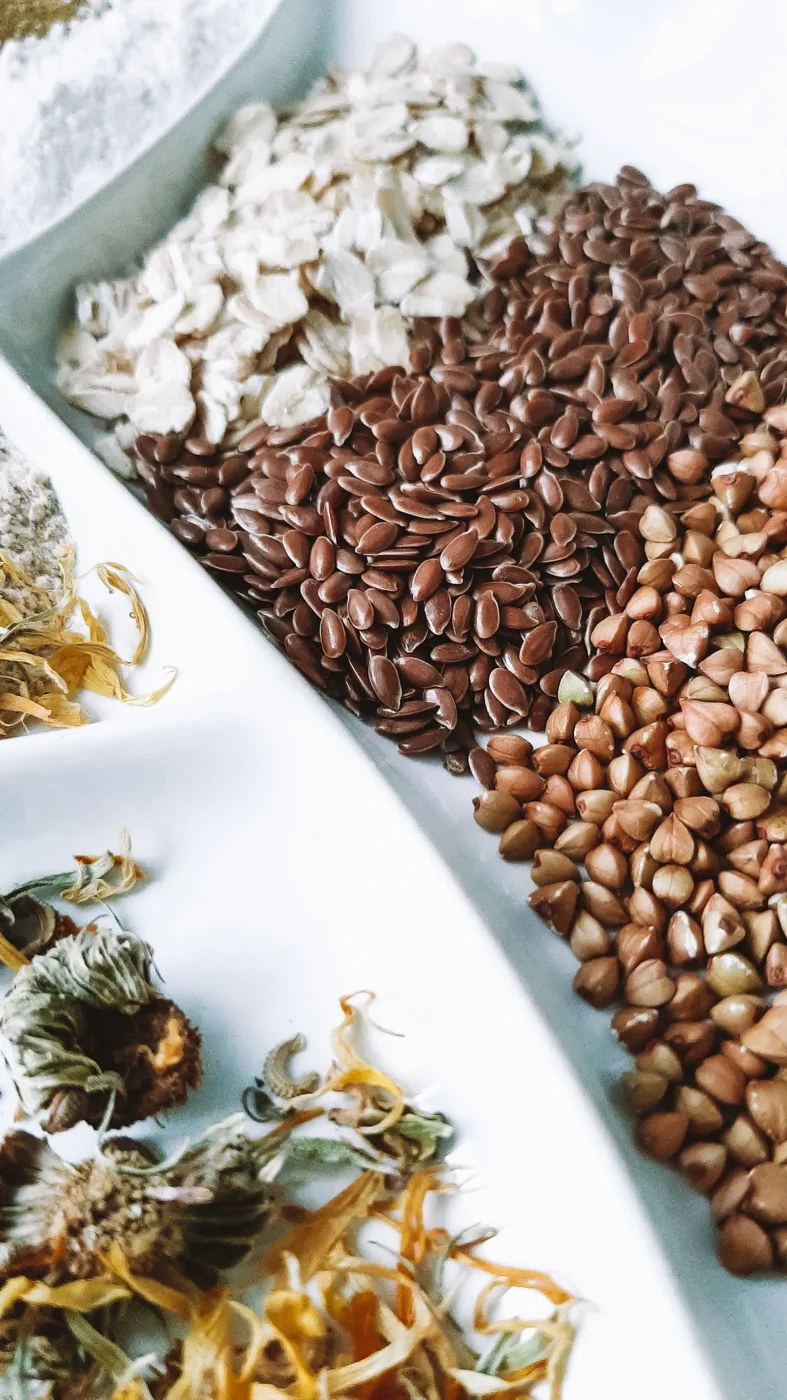
Brown paper, rustic lettering and a scattering of seeds can make a bread package look like a whole-grain choice. None of those design details tells you exactly which grain ingredients are inside. Turn the package around before letting its appearance make the decision.
Look for specific whole-grain ingredient names. Cornell Cooperative Extension explains why ingredient information is more useful than a product's color. Whole wheat, brown rice and oatmeal are examples you may recognize, while a general word such as wheat does not by itself tell the whole story.
Separate the claims you are comparing
A product can contain several grains without all of them being whole grains. Seeds on the crust are another separate feature. A label describing texture, grain variety or fiber content may answer a different question from whether the grain ingredient is whole.
Compare products within the kind of food you want to buy. If you need sandwich bread, look at breads you would realistically enjoy and use. There is little value in selecting a dense loaf that nobody eats solely because its packaging sounds more serious.
The ingredient list and Nutrition Facts panel have different jobs. One identifies what is in the food; the other reports nutrients for the stated serving. Read both when those details matter to your choice. A single appealing feature does not describe the complete product.
Bring the choice back to meals
Try a small package before buying a large quantity. A different bread may work well toasted but not in the sandwich you usually pack. A grain may need a longer cooking time than the one you normally use. Check preparation directions so the change fits the evening you have planned.
You can introduce a whole-grain food in a familiar meal rather than replacing every grain in the kitchen at once. Choose a preparation you enjoy and notice which sauces, vegetables or protein foods work with it. The change should remain something you want to eat.
Storage matters as well. Close packages properly, follow their instructions and freeze suitable portions when that helps you use them. Do not keep a large bag indefinitely simply because it was a good unit price.
Avoid turning the label into a ranking of meals
Whole-grain information can support a choice without making every other food a failure. Cultural preferences, budget, texture needs and individual medical guidance all influence what belongs on a plate. If you need a specific diet, follow advice tailored to you.
The next time two packages look equally wholesome, use the written information to distinguish them. A clear ingredient name and a food you will actually prepare are more useful than an earth-toned wrapper promising a general sense of goodness.
A bread comparison can stay simple
Take two fictional loaves with similar slice weights. One lists whole-wheat flour prominently in the ingredient list; the other describes itself as multigrain but lists enriched wheat flour first. The second may still contain some whole grains, but its name alone does not tell you how much. Read the rest of the information rather than assigning a percentage from the picture of grain on the bag. Then consider the bread's actual use: whether it holds a sandwich, toasts the way you like and can be used before it deteriorates. Label reading answers an ingredient question; it does not remove the need to choose a loaf that works in your kitchen.